




Why Do My Shirts Get Yellow Stains? Causes & Fixes

Table of Contents
- The Chemistry Behind Yellow Stains on Shirts
- Why White Shirts Turn Yellow in Storage
- How to Remove Yellow Sweat Stains from Shirts
- Why Do My Shirts Feel Stiff After Washing?
- Preventing Deodorant Stains on Clothing
- Fabric-Specific Care and Water Quality
- Choosing Shirts That Resist Yellow Stains
- Frequently Asked Questions
Last Updated: October 2, 2026
The Chemistry Behind Yellow Stains on Shirts
Yellow stains on shirts are not dirt. They are the result of a chemical reaction between your sweat and the products you put on your skin.
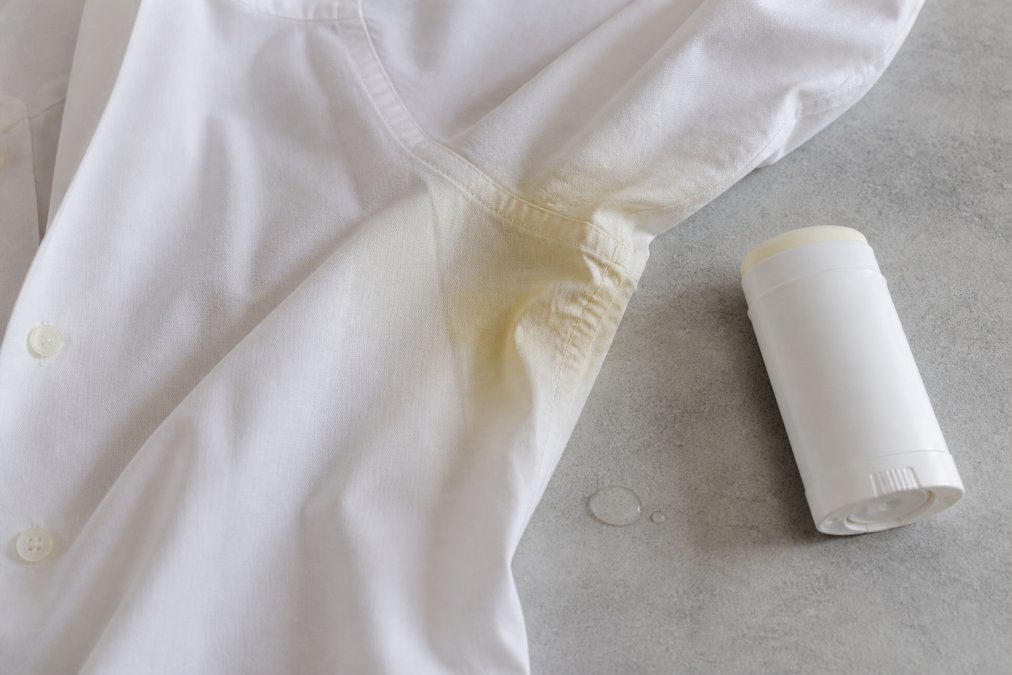
How Sweat and Aluminium-Based Antiperspirants React
Sweat is mostly water, plus salts, urea, and trace proteins. On its own, fresh sweat does not stain fabric yellow.
The Role of Body Oils, Sebum and Protein Build-Up
Sweat is not the only culprit. Sebum, your skin's natural oil, mixes with sweat and dead skin cells under the arms, feeding bacteria that break down proteins and oils. That breakdown produces the yellow-brown colour on old shirts, and the protein build-up makes fabric stiff.
Why White Shirts Turn Yellow in Storage
A clean white shirt can still turn yellow in the wardrobe. The cause is oxidation: any residue left on the fabric, invisible antiperspirant salts, sebum, detergent film, or starch sizing, reacts with oxygen over weeks and months to produce yellow discoloration. A shirt that passed a visual check can still carry enough residue to yellow.
Three factors accelerate the process:
- Moisture. Damp fabric oxidises faster. A shirt put away slightly under-dry will yellow sooner.
- Heat and light. Warm, sun-exposed storage speeds the reaction. A wardrobe against an external wall or near a heater is a risk.
- Trapped fumes. Plastic dry-cleaning bags and vacuum-sealed storage trap solvent fumes and moisture against the fabric, making the classic dry-cleaning bag one of the worst places to keep a white shirt long term.
A Seasonal Storage Protocol That Actually Works
Here is a real routine for putting white shirts away at the end of a season.
- Wash last, not first. Do not store a shirt worn since its last wash. Even one wear leaves residue.
- Treat the underarms before the final wash. Pre-treat (see the removal section below) even if no stain is visible, you are removing residue that has not yet oxidised.
- Skip starch and fabric softener on storage loads. Both leave a film that feeds oxidation; starch is a known yellowing accelerant on white cotton.
- Dry fully. Line dry in shade, then air indoors before folding. Any residual moisture is a problem.
- Cool before folding. Folding a warm shirt traps heat and moisture in the creases.
- Fold, do not hang, for long storage. Hanging stretches shoulders over months; fold along existing seams.
- Use a breathable cotton garment bag or pillowcase. Both allow air movement while keeping dust off.
- Add a moisture absorber nearby, not touching the fabric. Silica gel sachets in the wardrobe (not inside the bag) manage humidity.
- Re-check every three to four months. Unfold, air, and refold along different creases to break up oxidation starting in a fold line.
- Never store in a hot room. A cool, dark, dry wardrobe is the target.
Why 'It Looked Clean' Is Not Enough
The residue that causes storage yellowing is often invisible, antiperspirant salts and sebum are colourless until they oxidise, so a shirt can look perfect on the hanger and emerge yellow after a season.
How to Remove Yellow Sweat Stains from Shirts
Removing yellow sweat stains takes the right method, not more effort, harsh scrubbing damages fibers. The key is breaking down the protein and aluminium residue before washing.
Pre-Treatment Methods That Work
These pre-treatments loosen the stain before it hits the washing machine.
Method 1: Baking soda paste
- Mix 3 parts baking soda with 1 part water
- Apply to the stained area
- Let it sit for 30 minutes
- Brush gently with an old toothbrush
Method 2: White vinegar soak
- Mix 1 cup white vinegar with 2 cups cool water
- Soak the underarm area for 30 minutes
- Rinse before washing
Method 3: Hydrogen peroxide and dish soap
- Mix 2 parts hydrogen peroxide with 1 part dish soap
- Apply to the stain
- Let it sit for 20 minutes
- Rinse with cool water
Washing Techniques and Enzymatic Cleaners
Enzymatic cleaners are your best tool for protein stains, their enzymes break down proteins, oils, and urea. Wash stained shirts in cool water, since hot water can set the stain permanently. The routine that works:
- Pre-treat the underarm area
- Use an enzymatic detergent
- Wash in cool water on a gentle cycle
- Check the stain before drying
- Air dry if the stain remains
| Stain Level | Best Method | Time Needed |
|---|---|---|
| Fresh stain | Cold rinse + enzymatic wash | 15 minutes |
| Light build-up | Baking soda paste + wash | 45 minutes |
| Heavy yellowing | Vinegar soak + hydrogen peroxide | 1 hour |
| Set-in stain | Oxygen bleach soak overnight | 8+ hours |
Why Do My Shirts Feel Stiff After Washing?
Stiff shirts usually mean detergent residue is trapped in the fabric, a common, easy fix. Residue builds up when you use too much product or your machine does not rinse properly, and hard water makes it worse: its minerals bind with detergent and leave a chalky film that traps body oils, leading to more yellowing.
"Sweat Defender" Neat™ Crew T-Shirt →
To fix stiff shirts:
- Use less detergent than you think you need
- Add a half cup of white vinegar to the rinse cycle
- Run an extra rinse cycle for heavily soiled loads
- Clean your washing machine monthly
Preventing Deodorant Stains on Clothing
Prevention starts before the shirt goes on.
Switch application timing. Apply antiperspirant at night, not in the morning. The aluminium salts need time to plug sweat ducts. By morning, most of the product has absorbed. Less product transfers to your shirt.
Fabric-Specific Care and Water Quality
Fibre structure determines how residue binds and releases, so your approach should change with what you are washing.
Fibre-by-Fibre Breakdown
Cotton. Cotton fibres are hollow and absorbent, pulling sweat and antiperspirant salts into the fibre core where residue binds tightly. It also holds detergent film, so it can feel stiff and look dull even after a wash. It needs thorough rinsing, enzymatic cleaners, and a lower detergent dose than most people use. It tolerates oxygen bleach but not chlorine bleach, which weakens the fibre.
How Hard Water Affects Your Laundry
Hard water contains dissolved minerals, mainly calcium and magnesium, which react with detergent to form an insoluble curd, the same reaction that leaves scale in a kettle. On fabric, that curd deposits as a grey or yellow film that traps oils and residue.
Signs you are dealing with hard water:
- White residue on taps, shower screens, or the inside of the kettle
- Shirts feel stiff or scratchy straight out of the wash
- Detergent does not lather well
- Whites look grey or dull rather than bright
- Yellowing appears in patches, not just at the underarms
Fixes for Hard Water and Mineral Build-Up
- Use a detergent formulated for hard water. These contain builders that sequester calcium and magnesium so they do not deposit on fabric.
- Add white vinegar to the rinse cycle. Around half a cup in the rinse compartment helps dissolve mineral film. Do not mix vinegar directly with detergent in the same compartment, as they neutralise each other.
- Run an extra rinse. The single most effective step for residue removal in hard water.
- Use a water softener if your supply is very hard. A whole-house softener or laundry-specific unit removes the minerals before they reach the wash.
- Consider a laundry water filter for iron. If patchy yellowing persists, a filter that targets iron is the targeted fix.
- Clean the washing machine monthly. Mineral scale and detergent residue build up in the drum and transfer back onto clothes.
Matching the Method to the Fibre
The removal methods above are not universal. A baking soda paste is safe on cotton and linen but abrasive on viscose. Hydrogen peroxide works on cotton and polyester but can lighten coloured trims and weaken wool. Vinegar soaks are safe on most fibres but should be kept away from metal hardware, as the acid can dull zips and buttons. When in doubt, test on an inside seam first, and match water temperature to the fibre rather than the stain, cool water is the safe default.
Choosing Shirts That Resist Yellow Stains
The best stain treatment is a shirt that resists stains in the first place. Look for:
- Moisture-wicking technology that moves sweat away from skin
- Stain-resistant finishes that stop residue from bonding
- Breathable fabrics that reduce sweat production
- Fitted construction that keeps the shirt in contact with skin
Sweat Proof Apparel makes technical tees, polos, and undershirts with Neat™ Fabric. The fabric hides sweat from the inside out. The "Pit Stopper" Neat™ Crew Neck Undershirt ($55.00) has an extra underarm shield built in, designed to block sweat before it reaches your dress shirt.
Frequently Asked Questions
How to prevent yellow stains in shirts?
Prevent yellow stains by letting antiperspirant dry completely before dressing, wearing an undershirt as a barrier, and washing shirts after each wear. Switch to aluminium-free deodorant if you're prone to stains. For high-sweat situations, consider sweat-proof apparel like the "Pit Stopper" Neat™ Crew Neck Undershirt ($55.00) which blocks sweat from reaching your outer shirt. Always treat stains promptly and avoid heat until the stain is gone.
Why do I have random yellow stains on my clothes?
Random yellow stains often come from unnoticed spills, contact with oily surfaces, or residue from fabric softeners and detergents that oxidise over time. They can also appear where sweat and deodorant mix, especially on white or light-coloured fabrics. Check storage areas for dampness and ensure clothes are completely dry before putting them away. If stains appear after washing, it may be due to hard water minerals or leftover detergent.
Do aluminium-based deodorants cause yellow stains?
Yes, aluminium-based antiperspirants are a major cause of yellow stains. The aluminium compounds react with lactic acid and urea in sweat to form a yellow residue that binds to fabric fibres. This reaction is worsened by heat and time. If you want to avoid stains, choose aluminium-free deodorant or use an undershirt to create a barrier. Washing shirts promptly also helps remove the residue before it sets.
Can sweat alone cause yellow stains on white fabric?
Sweat alone can cause yellow stains, though it's less common than when mixed with antiperspirant. Sweat contains proteins, lipids, and urea that oxidise and turn yellow over time, especially on white fabric. The effect is stronger if sweat is left on the fabric for long periods or exposed to heat. Regular washing and pre-treating underarms can prevent build-up. For heavy sweaters, sweat-proof undershirts like the "Pit Stopper" Neat™ Crew Neck Undershirt ($55.00) add a protective layer.