




How to Get Yellow Stains Out of White Clothes: 2026 Guide

Table of Contents
- Why Yellow Stains Form on White Clothes
- What You'll Need Before You Start
- How to Get Yellow Stains Out of White Clothes: Step-by-Step
- How to Remove Deodorant Stains from White Shirts
- Preventing Sweat Stains on White T-Shirts
- Why Do My Shirts Feel Stiff After Washing?
- Fabric Safety, Water Hardness and Long-Term Storage
- Common Mistakes That Make Yellow Stains Worse
- Frequently Asked Questions
Last Updated: September 16, 2026
Why Yellow Stains Form on White Clothes
Yellow stains on white clothes are a chemical reaction, not just dirt. Understanding the cause is the first step in learning how to get yellow stains out of white clothes without damaging fabric.
Sweat, Deodorant and Aluminium Salts
Perspiration is mostly water and salts. When it mixes with antiperspirant, aluminium compounds meet the proteins and urea in sweat and create a yellowish residue that bonds to fabric fibres, building up in the underarm area.
How Oxidation and Residue Buildup Set Stains In
That residue doesn't stay colourless. Oxygen oxidises the built-up salts and proteins, turning them yellow, and heat makes it worse, every iron or warm dryer cycle bakes the stain deeper into the fibre. That's why a stored shirt can emerge with yellow patches: the stain was there all along.
What You'll Need Before You Start
Gather your supplies first so you never leave a soaking garment while searching for a missing item:
- An oxygen-based bleach (often labelled "oxygen bleach" or "colour-safe bleach"). This is not chlorine bleach.
- White vinegar for its mild acidic treatment.
- Baking soda to create a gentle alkaline solution.
- Hydrogen peroxide (3% solution) as a bleaching agent for tough stains.
- A soft-bristled brush or an old, clean toothbrush.
- A plastic basin or bucket for soaking.
- A liquid enzyme-based detergent to break down protein stains.
How to Get Yellow Stains Out of White Clothes: Step-by-Step
The most effective method for how to get yellow stains out of white clothes combines a pre-treatment, a long soak and a careful wash.
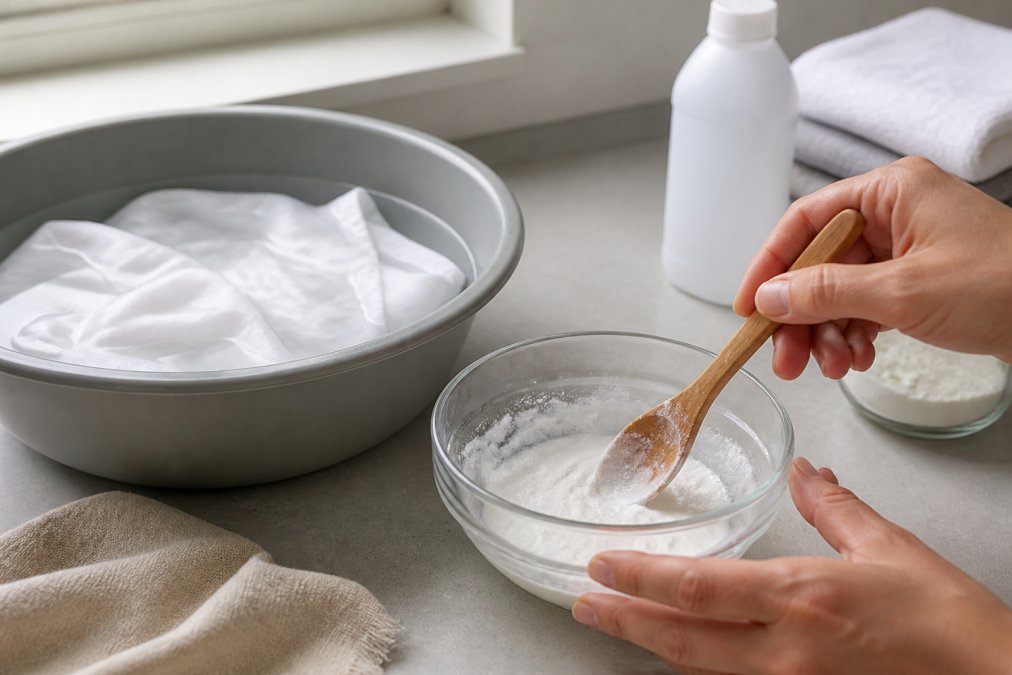
Step 1: Spot Test on a Hidden Seam
Before applying anything to the visible stain, test it on an inside seam or hem: apply a little solution, wait five minutes, blot with a white cloth, and stop if the colour or integrity is affected. This prevents trading a yellow stain for a bleached patch or a hole.
Step 2: Pre-Treat and Soak the Affected Area
Mix a baking soda and water paste and work it into the stain with your soft brush, or use hydrogen peroxide for a stronger treatment. Let it sit at least 30 minutes, then fill your basin with cool or warm water, add oxygen bleach per the packet directions, and submerge the garment for one hour to overnight.
Step 3: Wash, Rinse and Check Before Drying
After soaking, wash as normal with enzyme-based detergent on a warm cycle if the care label allows. Crucially, check the stain before drying, if any yellow remains, repeat the soak, because dryer heat sets the stain permanently.
How to Remove Deodorant Stains from White Shirts
Deodorant stains are two different problems needing different chemistry, getting the distinction right separates a shirt that comes back white from one with a permanent grey-yellow shadow under the arms.
Deodorant vs Antiperspirant Residue
Deodorants are mainly alcohol, fragrance and antibacterial agents; their waxy, slightly acidic residue usually lifts with a warm detergent wash plus a vinegar pre-soak.
The Vinegar Pre-Soak (For Light Buildup)
For a shirt with mild yellowing or fresh white deodorant marks:
- Turn the shirt inside out so the solution reaches the fibre side where residue sits.
- Pour undiluted white vinegar (4-5% acetic acid) into a shallow dish and submerge just the underarm panel.
- Leave 30 minutes; do not exceed an hour on coloured trims or printed logos, as acetic acid can dull screen-printed inks.
- Rinse in cool water, then launder with a liquid enzyme detergent.
The Oxygen-Bleach Soak (For Set-In Yellow)
For stains that have already turned yellow:
- Dissolve oxygen-based bleach (sodium percarbonate) in hot water around 60°C at the packet dose, undissolved granules can spot fabric.
- Top up with cool water until hand-warm, then submerge the underarm area.
- Soak 1-6 hours; overnight is fine for cotton, but keep synthetics to 2 hours maximum.
- Wash as normal, then inspect before drying.
Typically the first soak lifts 70-80% of visible yellow and a second soak clears the rest, don't expect one pass to fix a stain that has been through a dryer multiple times.
What Not to Do
- Do not use chlorine bleach on antiperspirant stains. It reacts with the aluminium and protein residue and can set the yellow permanently or turn it orange-brown.
- Do not scrub with a stiff brush. Underarm fibre is already weakened by sweat and deodorant; aggressive scrubbing creates a thinned grey patch no bleach will fix.
- Do not iron or tumble dry until the stain is gone. Heat cross-links the oxidised residue into the fibre, and an ironed-over yellow underarm stain is usually beyond home recovery.
Fabric-Specific Warnings
Not every white shirt can take the same treatment. Check the care label first:
- Cotton and cotton blends: Safe for vinegar, oxygen bleach and warm water, the most forgiving category.
- Linen: Safe for oxygen bleach, but keep water at or below 40°C and avoid wringing, as wet linen fibres crack when twisted.
- Polyester and synthetic blends: Oxygen bleach is fine at 30-40°C; avoid prolonged hot soaks, which yellow the fabric independently of the stain.
- Silk: Do not use oxygen bleach, hydrogen peroxide or vinegar, silk is a protein fibre and both acid and oxidisers degrade it. Spot-treat with pH-neutral detergent and cool water only, or use a dry cleaner.
- Wool: Same caution as silk, protein-based and alkaline-sensitive. A very dilute vinegar rinse (one tablespoon per litre) is tolerable; bleach is not.
Preventing Sweat Stains on White T-Shirts
Prevention is easier than removal, but most advice ignores the two factors that drive most recurring yellowing: water hardness and storage oxidation.
"Pit Stopper" Neat™ Crew Neck Undershirt →
The Daily Habits That Actually Matter
- Rinse the underarm in cool water within a few hours of wearing. Sweat becomes yellow when its proteins and urea oxidise and bind with antiperspirant residue; rinsing before it dries removes most of the raw material.
- Let antiperspirant dry completely before dressing. Applying to damp skin transfers a wet film of aluminium salts straight into the fibre, wait 60-90 seconds.
- Rotate shirts. Wearing the same white shirt two days running means residue never fully washes out; a three-shirt rotation gives each a full wash cycle to reset.
- Never iron or tumble dry a shirt with a fresh sweat mark. Heat sets the stain, air dry until the underarm is confirmed clean.
Hard Water: The Hidden Driver of Recurring Yellowing
If your whites yellow faster than your friends' and you've ruled out storage and deodorant, water hardness is the likely culprit.
What to do about it:
- Add a laundry booster with a chelating agent (sodium citrate, zeolite or EDTA) to every white wash so minerals rinse away instead of depositing.
- Add half a cup of white vinegar to the rinse cycle to dissolve alkaline detergent residue and mineral film.
- Use slightly more detergent than the minimum, under-dosing in hard water leaves surfactants unable to cope with the mineral load.
- Run a monthly hot wash with a washing machine cleaner to clear drum buildup that otherwise redeposits onto every load.
Long-Term Storage: Why Shirts Yellow in the Closet
A shirt that was white when stored can emerge months later with yellow fold lines and underarm patches, storage oxidation, a different problem from active sweat staining. The causes are residual body oils and starch that oxidise over months; acidic storage materials like wooden drawers and cardboard boxes; plastic and vacuum bags that trap moisture and promote mildew; and light and heat, which accelerate oxidation.
How to store whites properly:
- Wash thoroughly before storing, even if the shirt looks clean, using oxygen-based bleach in the final wash.
- Ensure the garment is bone dry, not just dry to touch.
- Wrap in acid-free tissue paper or a clean, unbleached cotton pillowcase.
- Store flat or loosely folded, tight folds create crease lines where oxidation concentrates.
- Keep in a cool, dark, dry place, avoiding the top of a wardrobe (heat rises) and garages or sheds (humidity swings).
- Re-wash stored whites every 6-12 months if unworn.
The Undershirt Layer
For heavy perspirers, the most reliable prevention is stopping sweat reaching the outer shirt at all. A sweat-blocking undershirt with a moisture-barrier underarm panel contains perspiration before it contacts the dress shirt, so the outer garment never accumulates the protein-and-aluminium residue that oxidises into yellow.
Why Do My Shirts Feel Stiff After Washing?
Stiffness after washing is usually leftover detergent or hard-water minerals drying into a crunchy film inside the fibres. Run an extra rinse cycle; in hard water, add a water softener or half a cup of white vinegar to the rinse. Overloading the machine also prevents proper rinsing, so wash smaller loads.
Fabric Safety, Water Hardness and Long-Term Storage
Not all white fabrics are the same, and treating them identically is a recipe for damage. Before you use any stain removal method, check the care label.
Matching the Method to the Fabric
- Cotton and linen: Durable and can handle oxygen bleach, hydrogen peroxide, and warm water.
- Polyester and synthetics: Use cooler water and avoid strong bleaching agents, which can degrade the fibres over time.
- Delicate fabrics like silk or wool: Do not use bleach or hydrogen peroxide. Spot test with a mild vinegar solution first, or seek professional dry cleaning.
How Water Hardness Changes Your Results
Hard water contains dissolved minerals, primarily calcium and magnesium, that react with soap and detergent to form a sticky scum that traps stains and dulls whites. In a hard water area, your stain removal efforts will be less effective. Using a water softener, or adding a chelating agent like a laundry booster, can dramatically improve your results.
Storing Whites So They Don't Yellow Again
Long-term storage yellowing is often caused by residual body oils or starch, or by storing clothes in wooden drawers or cardboard boxes that release acids over time.
To store whites safely:
- Wash them thoroughly before storing, even if they look clean.
- Use acid-free tissue paper or a clean cotton pillowcase.
- Avoid plastic bags, which can trap moisture and cause mildew.
- Store in a cool, dry, dark place. Light and heat accelerate oxidation.
Common Mistakes That Make Yellow Stains Worse
Several common errors turn a manageable stain permanent, avoiding them matters as much as following the right steps.
| Mistake | Why It Makes It Worse | The Fix |
|---|---|---|
| Using chlorine bleach | Can react with sweat proteins and set yellow stains permanently | Use oxygen bleach or hydrogen peroxide instead |
| Drying before checking | Heat sets the stain into the fibre permanently | Always air dry until you confirm the stain is gone |
| Using hot water on protein stains | Coagulates the proteins, bonding them to fabric | Start with cool or warm water |
| Overloading the washing machine | Prevents proper rinsing, leaves residue | Wash smaller loads with more water |
| Scrubbing aggressively | Damages fibres, creating a worn, grey patch | Use gentle, circular motions with a soft brush |
Frequently Asked Questions
Does vinegar take yellow out of white clothes?
White vinegar helps with mild yellowing caused by detergent residue and deodorant buildup. Its acidic nature breaks down the alkaline residue left behind after washing, which is often what makes whites look dull. Soak the garment in a mix of one part white vinegar to four parts cool water for 30 to 60 minutes, then wash as normal. Vinegar works best on fresh or light yellowing. For set-in stains that have been through a hot dryer multiple times, you'll usually need a hydrogen peroxide or oxygen bleach soak instead.
Can baking soda remove yellow stains from white clothes?
Baking soda works as a gentle alkaline cleaner that lifts residue and neutralises acidic sweat compounds. Make a paste with three parts baking soda to one part water, apply it to the underarm area, and let it sit for 20 to 30 minutes before washing. It's most effective on deodorant residue and light perspiration stains. For heavier yellowing, combine baking soda with hydrogen peroxide to create a fizzing pre-treatment. Always spot test first, especially on delicate fabrics or anything with elastane.
Why do my white shirts turn yellow in the armpits?
The yellowing comes from a chemical reaction between aluminium-based antiperspirant, your perspiration and the fabric fibres. Aluminium salts bind with proteins in sweat to form a stubborn yellow compound that clings to the fabric. Heat from your body and from the dryer sets the stain further. Regular washing alone won't shift it because the compound bonds to the fibre. You need an acidic pre-treatment, like vinegar or a dedicated stain remover, followed by an oxygen-based soak to break that bond before washing.
Can hydrogen peroxide damage white clothing?
Hydrogen peroxide at 3% concentration, the strength sold in pharmacies, is safe for most white cotton and cotton-blend fabrics when used correctly. It's a mild bleaching agent that breaks down into water and oxygen. Avoid using it on silk, wool, or anything containing spandex and elastane, as it can weaken those fibres over time. Never mix it with vinegar in the same container, as the combination creates peracetic acid. Apply it directly to the stain, let it sit for 15 to 20 minutes, then rinse thoroughly before washing.