




Sweat Hidden vs Minimal Shrinkage: Which Fabric Wins

Last Updated: November 12, 2026
Quick Summary
The best choice depends on where you wear the shirt. For sweat hidden under a dress shirt, a Pit Stopper Neat undershirt is designed for that job, while the Neat tee or polo works as a visible garment. To avoid shrinkage, wash cool and air dry, since heat is what locks shrinkage in.
- Pit Stopper Neat undershirts cost $55.00 and are designed to be worn beneath dress shirts.
- The Neat blend is 95% premium cotton and 5% spandex, with a manufacturer claim of no shrinking in the tumble dryer.
- Wash after each wear, since sweat and deodorant residue left overnight start to set.
- Use water no hotter than 30-40°C and avoid chlorine bleach on white cotton.
- Air dry or use the lowest dryer heat, removing garments while slightly damp.
Table of Contents
- Why Sweat Stains Turn Shirts Yellow
- How Sweat-Hiding Performance Is Measured Against Shrinkage
- Comparing the Neat Range: Crew Tee, Polo, Crew Undershirt and V-Neck Undershirt
- Best Fabric for Hiding Sweat and Staying Stable in the Wash
- How to Prevent Yellow Sweat Stains on Clothes
- How to Wash Shirts Without Shrinking and Remove Sweat and Deodorant Stains
- Choosing Your Next Sweat-Hiding Shirt
- Frequently Asked Questions
Sweat stains on white shirts are one of the most frustrating laundry problems, and the usual fix, washing harder, can shrink the very shirt you are trying to save. This comparison looks at the Sweat Proof Apparel range through the two things that matter most: how well the fabric hides sweat, and how well it keeps its shape after washing. Our aim is to help you pick the right piece for the job rather than sell you the most expensive one.
Why Sweat Stains Turn Shirts Yellow
Yellow underarm stains are not caused by sweat alone. They form when sweat, skin oils and the residue of antiperspirant or deodorant build up in the fabric and react over time, especially on light-coloured cotton, which is why a shirt can keep its sweat hidden only so long as the underarm stays clean. A single wear rarely does the damage. Repeated wear without proper washing does.
Many people notice the problem first on white or light shirts, where the stain is most visible. Once it sets, it becomes much harder to lift. That is why prevention matters more than rescue, and why the fabric you choose at the start makes a real difference.
How Sweat-Hiding Performance Is Measured Against Shrinkage
Two properties pull against each other. A tighter, denser knit can hide sweat better, but it can also be more prone to shrinking when washed hot or dried on high heat. A looser knit tends to stay stable, but may let moisture show through faster. Judging a shirt on only one of these will steer you wrong.
A fair comparison checks both. Look at how the garment handles moisture during wear, then at how it holds its size after several washes and a tumble dry. Sweat Proof Apparel states that its Neat™ tees and undershirts are made from a 95% premium cotton and 5% spandex blend and tumble dry without shrinking. Treat those as manufacturer claims, and test a shirt yourself across a few wash cycles before relying on it for a important event.
Comparing the Neat Range: Crew Tee, Polo, Crew Undershirt and V-Neck Undershirt
The Neat™ range covers four main options, and each suits a different job.
"Sweat Defender" Neat™ Crew T-Shirt, $59.99. This is a technical tee designed to keep sweat hidden. It suits casual days and active wear. Best for: everyday wear where a visible tee matters. View the Sweat Defender Neat™ Crew T-Shirt to see its details.
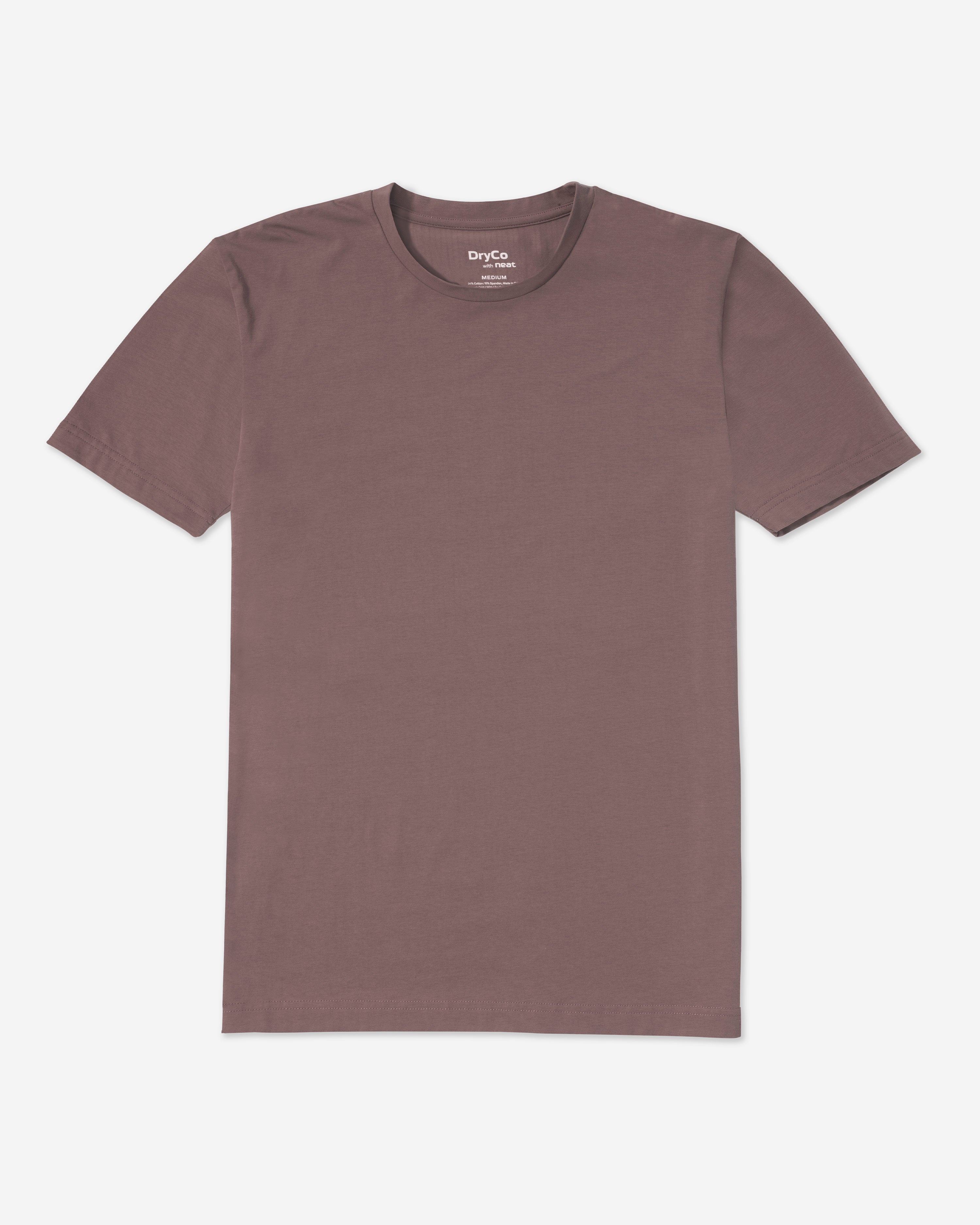
Neat™ Polo, $75.00. A two-button polo made from the same Neat™ fabric. It works for smart-casual dress codes and golf. Best for: smart-casual or sport settings. Skip if: you want the lowest price point in the range. See the Neat™ Polo's full details and price on its product page.
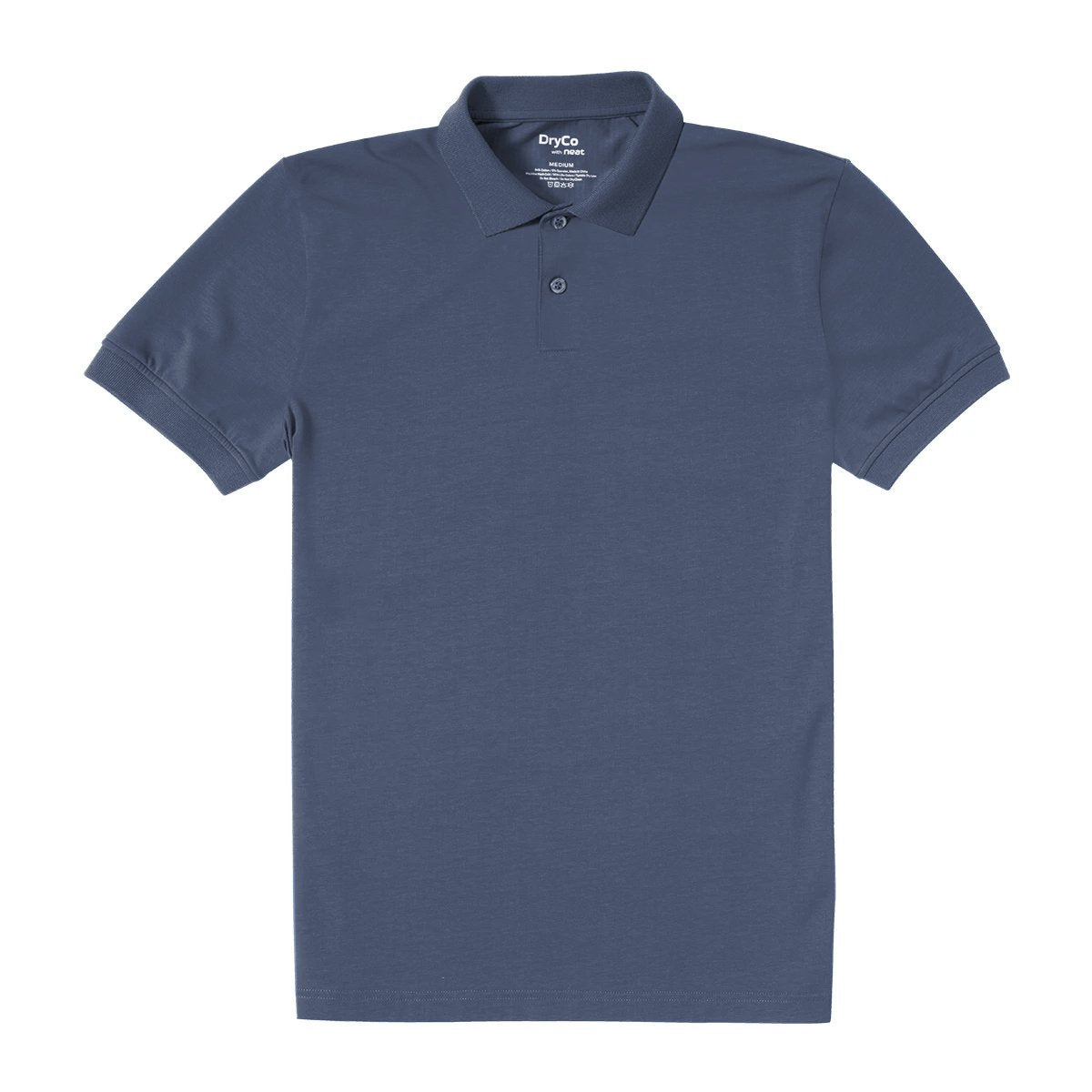
"Pit Stopper" Neat™ Crew Neck Undershirt, $55.00. Built as an undershirt with a fitted cut, it tucks under dress shirts. The listing notes an extra underarm shield in the upgraded design. White is transparent, so it can look damp even when dry. It is meant to be worn beneath something. Best for: blocking sweat under a dress shirt. Skip if: you plan to wear it alone as a visible tee.
"Pit Stopper" Neat™ V-Neck Undershirt, $55.00. The same fitted construction and underarm shield as the crew neck, in a V-neck cut. It suits open-collar shirts and layering. Best for: open-collar shirts. Skip if: you prefer a crew neck under a crew-neck top.
In short, the undershirts are the strongest choice for hiding sweat under a dress shirt, while the tee and polo serve as visible garments in their own right.
The four Neat™ options differ in price and in when each one is the right choice.
| Product | Price | Best for |
|---|---|---|
| "Sweat Defender" Neat™ Crew T-Shirt | $59.99 | Everyday wear where a visible tee matters |
| Neat™ Polo | $75.00 | Smart-casual or sport settings |
| "Pit Stopper" Neat™ Crew Neck Undershirt | $55.00 | Blocking sweat under a dress shirt |
| "Pit Stopper" Neat™ V-Neck Undershirt | $55.00 | Open-collar shirts |
Price
Best Fabric for Hiding Sweat and Staying Stable in the Wash
Most advice treats "fabric" as a single choice, but two separate properties are at work: how a fabric handles moisture at the underarm, and how its fibres and knit respond to water, heat and agitation. Getting both right is what keeps a shirt looking clean and fitting the same after twenty washes. If you have settled on this fabric, you can view the Pit Stopper Neat™ Crew Neck Undershirt that uses it.
Fibre type sets the shrinkage baseline. Cotton is a natural fibre that absorbs water and can relax or contract when washed, particularly in hot water or a hot dryer. Spandex adds stretch and recovery, so a small percentage, the 5% in the Neat™ 95% cotton / 5% spandex blend, helps the garment return to shape after wear and washing. Synthetic performance fibres such as polyester are generally more dimensionally stable in the wash but can hold odour and feel less breathable against skin. Blends are a compromise: they trade a little of cotton's comfort for better shape retention.
Knit density changes both sweat visibility and stability.
Fabric weight matters more than most people expect.
Construction decides where shrinkage shows. Check the care label for the fibre content and any pre-shrunk claim before you buy.
How to Prevent Yellow Sweat Stains on Clothes
Prevention is cheaper than removal. Three habits make the biggest difference.
- Wash after each wear. Sweat and deodorant residue left overnight start to set.
- Let deodorant dry before dressing. Wet product transfers onto fabric more easily.
- Rotate your shirts. Letting a garment rest between wears gives moisture time to dry out.
How to Wash Shirts Without Shrinking and Remove Sweat and Deodorant Stains
Shrinkage and staining are solved by the same discipline: keep heat and agitation low, and deal with residue before it sets. The detail is in matching the method to the fabric and colour.
Why shirts shrink. Cotton fibres relax and contract when wet, and heat, hot water, a hot dryer, or a hot iron, locks that contraction in. Agitation in a vigorous cycle also felts and distorts knit loops. So the levers are water temperature, cycle length, detergent choice and drying method, in that order of impact.
Treat the underarm before washing. For a fresh stain, dab a small amount of mild liquid detergent or a dedicated stain remover into the underarm area, work it in gently with your fingers, leave it for five to ten minutes, then rinse in cool water before the main wash. For set-in yellow marks, a paste of bicarbonate of soda and water can lift residue; apply it, leave it for fifteen to twenty minutes, and rinse. Test any paste on an inside seam first, especially on coloured or delicate fabric.
Match the wash to the fabric and colour.
- White cotton shirts: wash cool to warm (no more than 30-40°C) on a gentle cycle with a biological or oxygen-based detergent. Avoid chlorine bleach, it can yellow white cotton over time and weaken fibres. An oxygen bleach (percarbonate) is the safer brightener.
- Dark and coloured garments: turn inside out, wash cool, and use a colour-safe detergent. Hot water and prolonged agitation fade dye and accelerate shrinkage.
- Delicate and lightweight fabrics: use a mesh laundry bag, a delicate cycle and low spin. Hand-washing in cool water is gentlest where the label allows.
- Performance and stretch fabrics: skip fabric softener, which coats fibres and reduces wicking and stretch recovery, and air dry rather than tumble dry.
Dry with restraint. Air drying on a hanger or flat rack is the single best defence against shrinkage. If you tumble dry, use the lowest heat setting and remove the garment while slightly damp. High heat is what turns a stable shirt into a short one.
Deal with deodorant residue. Let antiperspirant or deodorant dry fully before dressing, and consider applying it to skin rather than letting it transfer to fabric. Residue that builds up in the underarm is what reacts with sweat to form yellow stains, so a regular cool wash after each wear is more effective than occasional heavy treatment.
Choosing Your Next Sweat-Hiding Shirt
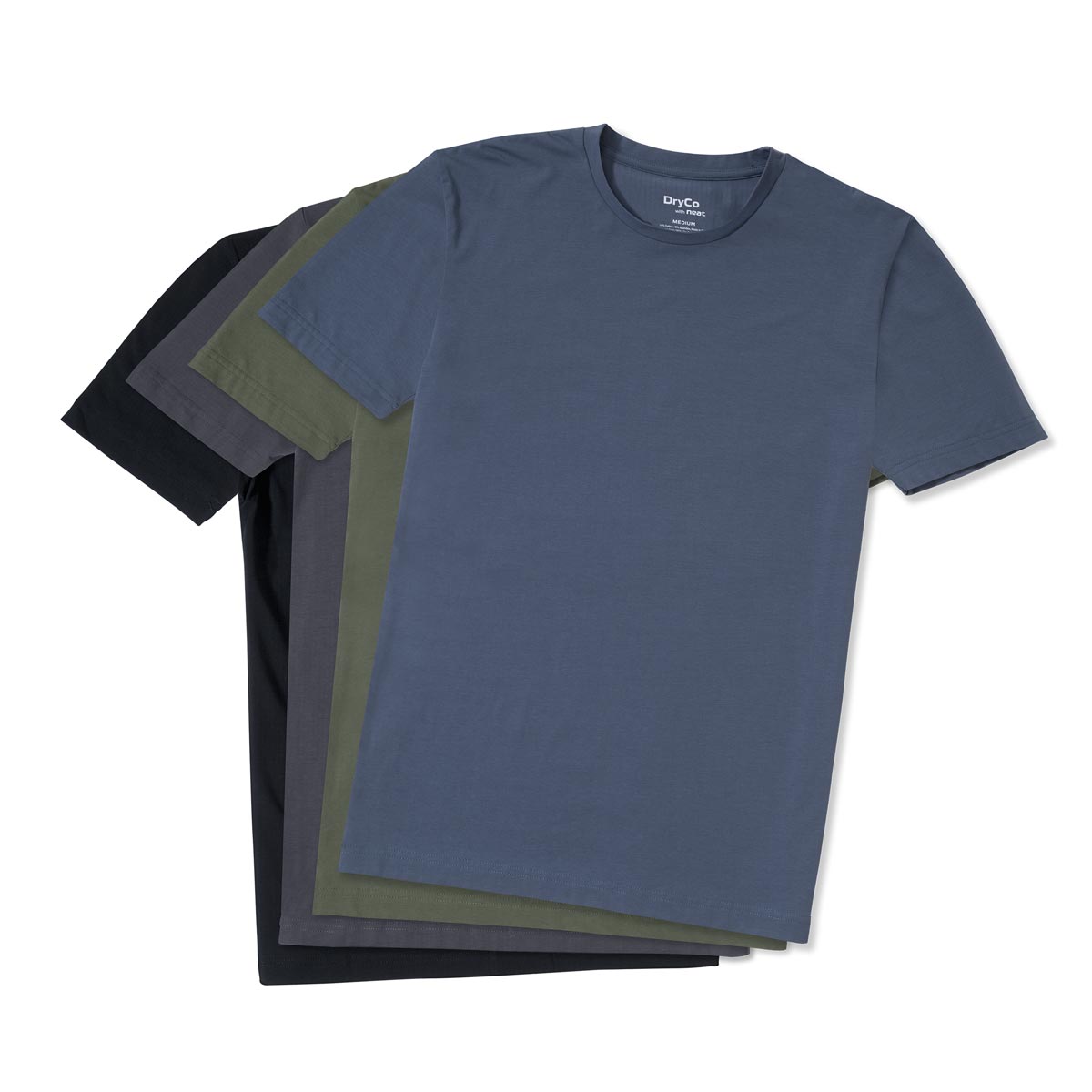
If you wear dress shirts and want sweat kept out of view, a "Pit Stopper" undershirt, either crew neck or V-neck depending on your collar, is designed to be worn beneath them. If you want a single garment that works on its own, the Neat™ Crew T-Shirt or Polo is the better pick. The Neat™ T-Shirt 4-Pack ($181.50) includes one tee in each colour, all in the same size.
Still deciding between a sweat-hiding layer and a low-shrink everyday shirt? Compare the two approaches in our guide on Low-Shrink vs Sweat-Hiding Shirts: Which to Choose. If you already know which piece you want, you can view the Neat™ T-Shirt 4-Pack directly.
Frequently Asked Questions
What causes yellow stains under the arms of shirts?
Yellow underarm stains form when sweat, skin oils and deodorant or antiperspirant residue build up in the fabric and then oxidise, especially when shirts are not washed soon after wearing. Aluminium compounds in antiperspirants can react with sweat and leave yellowish marks that heat sets over repeated wears. Washing shirts soon after wearing, pre-treating the underarm area and avoiding heavy product layering all reduce the build-up.
Do sweat-proof shirts prevent yellow underarm stains?
A sweat-proof undershirt such as the Pit Stopper Neat Crew Neck Undershirt ($55.00) is designed to block sweat from passing through to your dress shirt, so it protects the outer garment from the moisture and residue that cause yellow marks. It does not stop sweat in the undershirt itself, so the undershirt still needs regular washing. Because the white fabric is transparent, it may look wet when dry, so wear it as a layer underneath rather than on its own.
Does the Neat fabric shrink after washing?
The Neat range is made from 95% premium cotton and 5% spandex, and the listings state that these garments tumble dry without shrinking. Washing still matters: use a cool or warm cycle, avoid high heat and remove garments from the dryer promptly. Following these steps keeps the fit stable and helps the fabric hide sweat over many wears.
How do I remove old sweat stains from a shirt?
Old yellow sweat stains respond best to pre-treatment before a normal wash. Apply a laundry detergent with enzymes to the underarm area, leave it for 15 to 30 minutes, then wash in the warmest water the care label allows. For stubborn marks, a paste of bicarbonate of soda and water can be worked in gently before washing. Avoid bleach on coloured or patterned garments, and check the result before drying, because heat can set any remaining stain.
