




Keeping Sweat Hidden Under Men's Formalwear

Quick Summary
Sweat hidden formalwear starts with a layer underneath the shirt, because sweat usually begins in the underarm area and spreads into light cotton shirts. A sweat-blocking undershirt with an extra underarm shield stops moisture before it reaches the outer shirt, and choosing a mid-tone shirt with room through the chest helps further.
- Sweat usually starts in the underarm area, where glands are densest and fabric sits closest to skin.
- A regular cotton undershirt passes moisture through once it is saturated, while a sweat-proof version is built to stop that transfer.
- The Pit Stopper Neat crew neck and V-neck undershirts are each A$55.00 and include an extra underarm shield.
- Mid-tone and darker shirts hide moisture better than white, and a looser cut gives air room to move.
- Tuck the shirt in firmly and use airflow in the jacket, since the lower back and centre back also show sweat.
Table of Contents
- Why Sweat Shows Through Formal Shirts and Where It Starts
- Sweat-Proof Undershirt vs Regular Undershirt: What Actually Changes
- Choosing the Best Undershirt for Excessive Sweating
- Dress Shirts That Don't Show Sweat: Colour, Fabric and Fit
- Sweat-Proof Shirts for Formal Wear: A Plan for Each Occasion
- Staying Cool and Keeping Blazers Dry Without Losing Polish
- Caring for Sweat-Blocking Garments So They Last
- Building Your Formal Layering Setup This Week
- Frequently Asked Questions
Why Sweat Shows Through Formal Shirts and Where It Starts
Sweat that reaches a dress shirt usually starts in the underarm area, where glands are densest and fabric sits closest to the skin, which is why sweat hidden formalwear starts with a layer underneath. A shirt with no barrier underneath lets that moisture spread into the cotton, and white or light shirts show it first. The fix is a layer that absorbs or blocks moisture before it reaches the outer shirt, not a bigger shirt or heavier deodorant alone. To see how the fabric actually stops sweat, check out Our Sweat Proof Technology.
For most men, the visible problem comes in patches. Darker fabrics hide some of it, but pale formal shirts, shirts worn under tight jackets, and long meetings in warm rooms all expose the same weak point. Understanding that the sweat starts under the arm, and moves outward, tells you where to focus your protection.
Sweat-Proof Undershirt vs Regular Undershirt: What Actually Changes
A regular cotton undershirt soaks up some sweat, but once it is saturated, moisture passes through to the shirt above. For a deeper side-by-side look at both types, read Sweat Proof Undershirt Vs Regular Undershirt. A sweat-proof undershirt is built to stop that transfer. The Neat™ range uses a blend of 95% premium cotton and 5% spandex, with an extra underarm shield built into the design.
The practical difference is coverage and fit. A sweat-proof version is the better choice when you have a shirt you cannot afford to ruin, or when the day is long and the room is hot. Note that the Neat™ undershirts are designed to be worn as an undershirt. White is transparent, so the garment can look damp even when it is dry, which is why it belongs under a shirt rather than on its own.
Choosing the Best Undershirt for Excessive Sweating
If you sweat heavily, look first at the underarm protection rather than the general fabric. The Pit Stopper Neat™ Crew Neck Undershirt (A$55.00) is designed to tuck comfortably under the dress shirts and polos you normally sweat through. The Pit Stopper Neat™ V-Neck Undershirt (A$55.00) is a V-neck undershirt designed to tuck comfortably under the dress shirts and polos you normally sweat through.
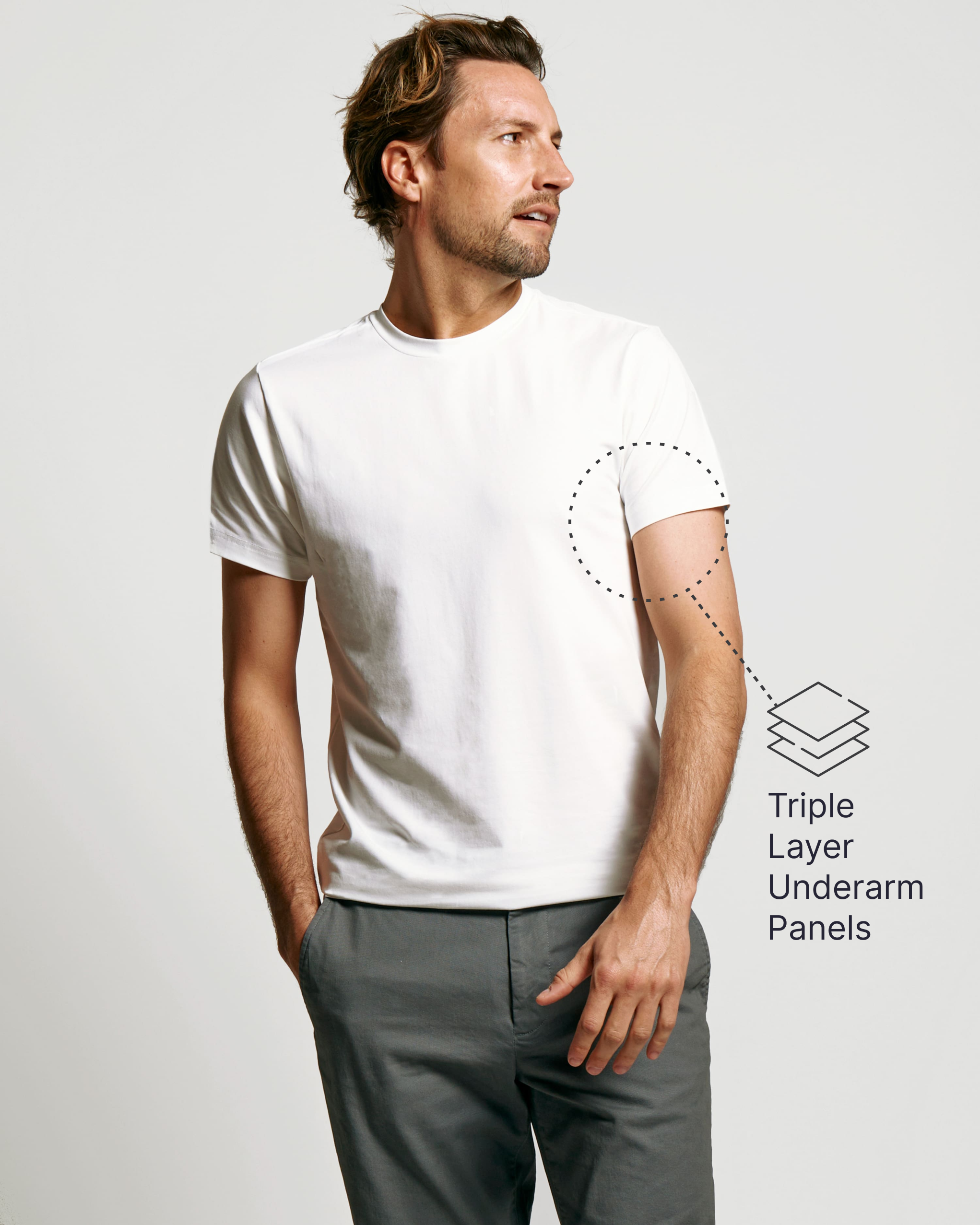
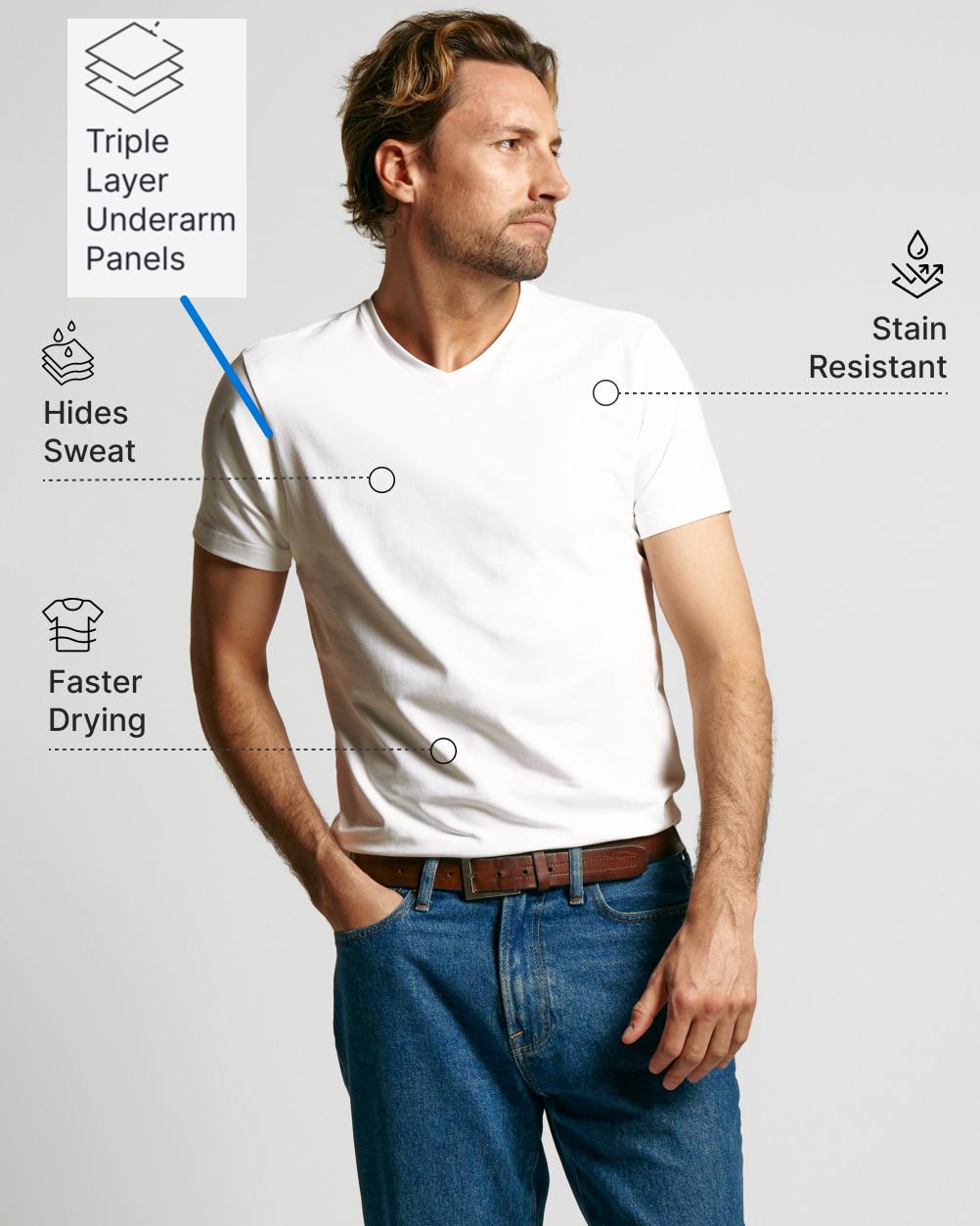
Both styles are made from the same Neat™ Fabric and include an extra underarm shield, so the choice comes down to neckline. If you want to try the sweat-proof design before committing to one style, the Pit Stopper 4-Pack (A$187.00) lets you buy both crew and V-neck options in the same size. The Neat™ Intro Pack (A$87.00) includes one white sweat-blocking undershirt and a black sweatproof tee in the same size.
These garments are designed to tuck under your shirt with a fitted construction, so choose the size you normally wear and check that movement feels comfortable across the shoulders.
The article's undershirt options differ mainly in neckline and bundle size, so the table below sets them side by side.
| Product | Price | Key detail |
|---|---|---|
| Pit Stopper Neat™ Crew Neck Undershirt | A$55.00 | Crew neck, extra underarm shield |
| Pit Stopper Neat™ V-Neck Undershirt | A$55.00 | V-neck, extra underarm shield |
| Pit Stopper 4-Pack | A$187.00 | Crew and V-neck in the same size |
| Neat™ Intro Pack | A$87.00 | White sweat-blocking undershirt plus black sweatproof tee |
Dress Shirts That Don't Show Sweat: Colour, Fabric and Fit
Colour and fit do as much work as the undershirt. Mid-tone and darker shirts hide moisture more effectively than white, and a shirt cut slightly looser through the chest and underarm gives air room to move. A shirt that pulls tight across the arms traps heat and pushes sweat outward.
Fabric matters too. Cotton breathes well but holds moisture, so pair it with a sweat-blocking undershirt. Lightweight blends dry faster and show less wet patching. Our advice is to pick a shirt in a colour you already wear, then add the undershirt layer before testing it in a real working day, rather than changing everything at once.
Sweat-Proof Shirts for Formal Wear: A Plan for Each Occasion
Most advice stops at "wear an undershirt." A plan that actually holds up on the day needs a sequence: what goes against the skin, what goes over it, what you carry, and what you do when the room turns hot. Below are four common formal scenarios, each built around the same core layer but adjusted for heat, duration, and visibility.
Job interview or presentation (90 minutes, air-conditioned room). Start with a crew-neck sweat-blocking undershirt under a mid-tone or light-blue dress shirt. A crew neck sits cleanly under a tied collar and will not peek at the throat. Choose a shirt with a little room through the chest and underarm, a shirt that pulls tight traps heat and pushes moisture outward.
Wedding or outdoor ceremony (four to six hours, mixed heat). This is the day to carry a spare. Wear the V-neck sweat-blocking undershirt under an open-collar shirt for the ceremony, then switch to a crew neck if you move into a tie for the reception. Pack a second undershirt in a small bag and change once, before photos or speeches, rather than waiting until you feel damp. Choose a shirt in a mid-tone or patterned fabric, a fine check or a light stripe breaks up the visual edge of any moisture that does reach the outer layer. Keep the jacket off during the meal and put it back on for formal moments.
Long client meeting or conference (all day, unknown room temperature). Plan around the room rather than the outfit. Wear the lighter V-neck style under a shirt you can open at the collar between sessions. If you know the venue runs hot, choose a lightweight cotton or cotton-blend shirt over a heavy poplin, and keep the jacket on the back of the chair when you can.
Black-tie evening (three to four hours, warm venue). The crew neck usually sits better under a formal shirt with a waistcoat, because the higher neckline stays hidden under the tie and collar. Choose a shirt with a plain front and avoid stiff, heavy fabrics that hold heat against the chest. Keep the jacket on for the room, but step outside or into a cooler space between courses if you can.
Across all four, the variables are the same: neckline matched to the collar, shirt colour and pattern matched to the light, one spare layer for anything over three hours, and jacket management as the day heats up. Get those four right and the occasion takes care of itself.
Watch out: a spare undershirt is only useful if it is the same size and neckline as the one you are wearing, a different fit will show under the same shirt.
Staying Cool and Keeping Blazers Dry Without Losing Polish
Underarm protection is only part of the picture. A blazer traps heat against the torso, and the areas that show moisture first are often not the underarms at all: the centre back, the chest under a lapel, and the lower back where a shirt tucks into trousers.
Understand where the heat goes. A jacket lining, especially a full lining in polyester or viscose, holds warm air against the shirt. That warm air condenses on the coolest surface, which is usually the shirt back and the jacket lining itself.
Choose the jacket construction for the heat. An unlined or half-lined jacket lets far more heat escape than a fully lined one. If you are buying for warm-weather formal wear, look for a half-lined back or a breathable lining such as cupro or a lightweight cotton.
Manage the shirt back and lower back. Tuck the shirt in firmly so the fabric sits flat against the lower back rather than bunching, which traps heat. A shirt with a back pleat or a slightly longer tail gives you room to move without the fabric pulling tight.
Use the jacket as a tool, not a costume. Remove it during long seated periods, carry it over the arm rather than wearing it through a hot commute, and put it back on for the moments that matter.
Carry the right small items. A folded handkerchief for the brow, a spare undershirt for a long day, and a lightweight overshirt or knit you can swap for the jacket in a genuinely hot room. None of these cost much, and each one removes a reason to keep a heavy layer on when you do not need it.
Watch out: a tight jacket across the back is the single most common cause of a visible lower-back patch, if the jacket pulls when you reach forward, it is too small for hot-weather wear, regardless of how well it fits in the mirror.
Caring for Sweat-Blocking Garments So They Last
The garments are designed to tumble dry without shrinking, so you can expect them to keep their fit through regular laundering.
Rotating two or three undershirts is a practical way to spread wear across your wardrobe.
Building Your Formal Layering Setup This Week
Start with one decision: choose either the crew neck or V-neck style based on your usual shirts. Buy one Pit Stopper Neat™ undershirt (A$55.00), or the Neat™ Intro Pack (A$87.00) if you want to test a second option. Wear it under your regular formal shirts for a working week and note where you still see moisture.
Then adjust one variable at a time. Try a darker shirt on the hottest day, or add a spare undershirt for a long event. Within a week you will know whether your setup holds up, and you can build the rest of your formal wardrobe around what works for you.
Frequently Asked Questions
What should men wear under a dress shirt to hide sweat?
A fitted sweat-blocking undershirt worn as a dedicated layer under the dress shirt is the most reliable option. Crew neck styles such as the Pit Stopper Neat Crew Neck Undershirt (AUD 55.00) are designed to tuck under dress shirts and polos and include an extra underarm shield. Choose a fit that sits close to the body without restricting movement, and avoid wearing a white layer under a light shirt if you want the garment to stay invisible. Pairing the undershirt with a mid-tone or dark dress shirt makes any remaining moisture less noticeable.
Do sweat-proof undershirts work under formalwear?
Yes, when worn as an undershirt rather than a standalone top. A sweat-proof undershirt works under dress shirts, polos and fitted formal layers, where it absorbs moisture before it reaches the outer fabric. The Pit Stopper Neat V-Neck Undershirt (AUD 55.00) is designed for the same purpose, and the 4-Pack (AUD 187.00) is useful if you need replacements for regular wear. Because the garment is built to be covered, it is not intended to hide sweat when worn alone under a light or white top.
Are sweat-proof undershirts different from regular undershirts?
Yes. A regular cotton undershirt absorbs some sweat but often lets it reach the dress shirt, especially at the underarm, where marks appear first. Sweat-proof undershirts use a technical fabric blend, 95% premium cotton and 5% spandex in the Neat range, with a built-in underarm shield designed to block moisture from passing through. They also tumble dry without shrinking, which helps them keep their fit over time.
How should I choose an undershirt for heavy sweating?
Match the undershirt to your sweat level and the climate you dress for. For heavy sweating or hot weather, choose an undershirt with a built-in underarm shield and a fitted cut that stays in place under a dress shirt. Lighter sweat in cooler offices may only need a standard sweat-blocking crew neck. The Neat Intro Pack (AUD 87.00) includes a white sweat-blocking undershirt and a black tee, which is a practical way to try the fit before committing to a larger set.
