




How to Wash Sweat Proof Shirts: A Step-by-Step Guide

Table of Contents
- How to Wash Sweat Proof Shirts: The Full Routine
- How to Wash Moisture-Wicking Shirts Without Damaging Them
- How to Remove Armpit Sweat Stains from Shirts
- How to Remove Deodorant Build-Up from Shirts
- Best Detergent for Sweat Stains: What to Look For
- Drying and Heat Precautions for Sweat Proof Shirts
- Common Mistakes That Ruin Sweat Proof Shirts
- Frequently Asked Questions
Last Updated: October 6, 2026
How to Wash Sweat Proof Shirts: The Full Routine
Sweat proof shirts are technical garments with a built-in underarm barrier, so they need a gentler wash routine than an ordinary tee. Get this routine right and a sweat proof shirts cycle takes about 40 minutes of machine time.
Below, we break down the full wash, rinse and dry process, plus fixes for stains and smells that survive a normal cycle.
What You'll Need
- A mild, enzyme-based laundry detergent
- White vinegar for odour and residue
- Bicarbonate of soda for stubborn stains
- A mesh laundry bag
- A drying rack or clothesline
Skip chlorine bleach and skip fabric softener. Both coat the fibres that do the sweat-hiding work.
Step-by-Step Washing Instructions
- Check the care label first. Follow the manufacturer's instructions over any general advice, including ours.
- Turn the shirt inside out. This protects the outer surface and lets water reach the underarm barrier.
- Pre-treat the underarms. Dab a little diluted detergent or a bicarb paste onto the underarm panel. Leave it 15 minutes.
- Pre-soak if the shirt is heavily soiled. 30 minutes in cool water with a capful of vinegar.
- Load loosely. Never pack the drum. Sweat proof shirts need room to move.
- Use the right dose of detergent. Too much leaves residue that traps odour. Too little leaves body oils behind.
- Wash cold on a gentle cycle. A 30°C cycle is plenty.
- Skip the fabric softener entirely.
- Air-dry in shade, or tumble on low only.
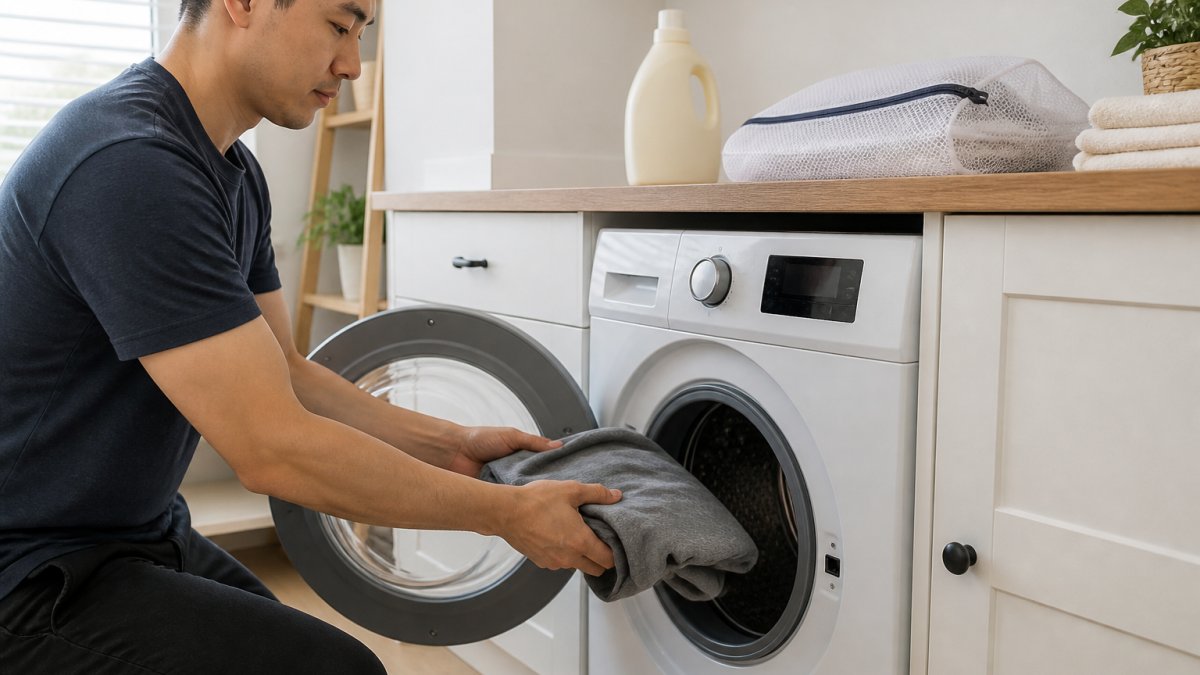
A common mistake is treating a technical shirt like a towel. The underarm barrier is a construction detail, and heat plus softener breaks it down.
How to Wash Moisture-Wicking Shirts Without Damaging Them
Moisture-wicking shirts move sweat to the surface of the fabric so it can evaporate quickly, using fibre shape, capillary channels, or a hydrophilic treatment on the yarn.
The Australian Competition and Consumer Commission guide to clothing care labels is a useful reference for what a care label actually obliges you to do. If the label says warm wash and you want to use cold, cold is the safer choice for wicking performance.
Match the routine to the fabric and construction
- 100% polyester or polyamide wicking knits: Wash cold on a gentle cycle with enzyme detergent. These are the most tolerant technical fabrics, but they still pick up oily residue from skin and sunscreen, so pre-soak if the shirt feels slick.
- Polyester-spandex or nylon-spandex blends: Stretch fibres are heat-sensitive. Keep the wash at 30°C or below and air-dry; high heat relaxes the spandex and the shirt loses its shape.
- Cotton-rich sweat-proof shirts with an underarm barrier: Treat the barrier as the delicate part. Turn the shirt inside out, pre-treat the underarm panel, avoid cycles that twist or crush it, and use a mesh bag.
- Shirts with bonded seams or taped underarm panels: Bonded seams are glued rather than stitched, and heat plus agitation breaks the bond. Wash cool, avoid high spin speeds, and never tumble dry on high.
- Shirts with a waterproof or windproof membrane: Membranes are usually fine in a gentle cold wash, but detergent residue impairs breathability. Use liquid enzyme detergent at the low end of the dose range and add an extra rinse if available.
- Shirts with a built-in underarm shield or sweat pad: The shield is the functional core of the garment. Pre-soak it, wash gently, and check it is flat and intact before drying. A shield that has curled or separated will not hide sweat even if the rest of the shirt is clean.
Some practical points:
- Wash after every wear. Sweat and deodorant set into the fabric over time.
- Keep the load small so the shirts aren't crushed.
- Use a mesh bag when washing with heavier items.
- Never wring them out. Press the water out gently instead.
- Follow any care label temperature or cycle over the general rules here.
If you wear a sweat-resistant undershirt under a dress shirt, the undershirt takes the sweat and the outer shirt stays clean. That's the whole point of the layer.
How to Remove Armpit Sweat Stains from Shirts
Sweat stains come from a reaction between aluminium salts in antiperspirant and your sweat, and respond best to a mild acid followed by an enzyme detergent. Mix one part white vinegar with two parts cool water, soak the underarm area for 30 minutes, then wash as normal.
For older, yellower marks:
- Make a paste from bicarbonate of soda and a little water.
- Work it into the stain with an old toothbrush.
- Let it sit for 20 minutes.
- Rinse, then wash cold with enzyme detergent.
- Repeat once if the mark is still visible. Don't reach for bleach.
Lemon juice works on the same principle as vinegar, but it can lighten dark colours. Test it on a hidden seam first.
How to Remove Deodorant Build-Up from Shirts
Deodorant build-up is the waxy white residue that survives a normal wash and needs a pre-soak to shift. Soak the shirt for 30 minutes in cool water with half a cup of white vinegar, then wash on a gentle cycle.
Watch for these signs that build-up has taken hold:
- The underarm area feels stiff or crusty when dry
- White or grey patches on dark fabric
- A musty smell that returns soon after washing
- The fabric looks dull compared to the rest of the shirt
For heavy build-up, add a scoop of bicarb to the pre-soak. Then check the underarm panel before drying. Heat sets residue in place, so if it's still there, wash it again first.
Best Detergent for Sweat Stains: What to Look For
The best detergent for sweat stains is a mild, enzyme-based liquid with no added softener or bleach. Enzymes break down the proteins and oils in sweat that ordinary soap leaves behind, which is why a technical wash works better than a standard one.
Check the label for:
"Sweat Defender" Neat™ Crew T-Shirt →
- Enzymes listed as protease, amylase or lipase
- No optical brighteners, which dull dark colours over time
- No chlorine bleach
- A liquid formula, which rinses out of technical fabric more cleanly than powder
Dose matters as much as the product. Use the amount on the bottle for a cold, lightly soiled load, and no more. Extra detergent doesn't clean better; it leaves residue that traps odour. For a front loader, use the low-water setting dose.
Drying and Heat Precautions for Sweat Proof Shirts
Heat is the fastest way to ruin a sweat proof shirt, so air-dry wherever you can.
Heat is so damaging because sweat proof shirts are usually a composite garment. The outer fabric, stretch yarn, underarm barrier, and any bonded seams or taped panels respond to heat at different rates.
A sensible drying order:
| Method | Heat Level | Effect on the Garment | Best For |
|---|---|---|---|
| Line dry in shade | None | Preserves fit and barrier | Everyday use |
| Flat dry on a rack | None | Keeps shape, no stretching | Delicate knits |
| Tumble dry low | Low | Safe for cotton-spandex blends | Quick turnaround |
| Tumble dry high | High | Shrinks fabric, breaks down barrier | Never |
| Direct sun | High | Fades colour, stiffens fibres | Avoid |
Dry shirts inside out and out of direct sun. If you're short on time, a low tumble for a few minutes then hang to finish works well.
If you must use a dryer
- Choose the lowest heat setting, or a no-heat air-fluff cycle if available.
- Take the shirt out while slightly damp and hang it to finish, reducing heat exposure.
- Do not use dryer sheets. They deposit a waxy film that clogs wicking fibres and can mark dark fabric.
- Clean the lint filter before every load. A clogged filter slows drying and pushes people to hotter settings.
- Never dry a shirt with visible deodorant residue or a stain. Heat sets both, turning a stain that would have washed out into a permanent one.
Drying by construction
- Shirts with a bonded or taped underarm panel: Air-dry only. The adhesive is the weakest point and heat fails it first.
- Shirts with a waterproof or windproof membrane: Air-dry or tumble on no heat. High heat can delaminate the membrane from the face fabric.
- Shirts with a high spandex content: Air-dry to protect the stretch. A short low tumble won't restore lost shape, and high heat makes it worse.
- Cotton-rich sweat proof shirts: These tolerate a low tumble better than fully synthetic fabrics, but the underarm barrier still sets the ceiling. Low heat, short cycle, remove damp.
- Shirts with a printed or coated outer surface: Air-dry inside out. Direct heat and sun degrade prints and coatings.
If unsure, the safe default for any sweat proof shirt is to press the water out gently, reshape by hand, and hang it in the shade. It takes longer, but it protects the construction that makes the shirt work.
Common Mistakes That Ruin Sweat Proof Shirts
The mistakes that shorten a sweat proof shirt's life are mostly about heat and chemicals, and most people ruin these garments in the first month by washing them like a regular tee.
- Fabric softener. It coats the fibres and blocks the wicking action.
- Hot water. It shrinks the fabric and stresses the underarm barrier.
- Too much detergent. Residue traps odour and dulls the colour.
- Bleach. It yellows sweat stains and damages the barrier.
- Overloading the machine. Shirts need room to move to rinse properly.
- High heat drying. The single biggest cause of shrinkage and barrier failure.
If odour keeps coming back, the cause is usually trapped bacteria in the underarm panel. A 30-minute vinegar soak before washing clears most cases.
For anyone managing hyperhidrosis, having three or four shirts in rotation makes the routine far easier. Our health information on hyperhidrosis from Healthdirect covers when excessive sweating is worth discussing with a doctor.
That's why we built the "Pit Stopper" Neat™ Crew Neck Undershirt. For everyday wear, the "Sweat Defender" Neat™ Crew T-Shirt uses the same Neat™ Fabric to hide sweat from the inside out.


Frequently Asked Questions
Can you put sweat proof shirts in the washing machine?
Yes, most sweat proof shirts are machine washable, but you should always check the care label first. Use a cold, gentle cycle and turn the shirt inside out to protect the sweat-blocking layer. Avoid hot water and heavy-duty cycles, which can break down the fabric technology over time. A mesh laundry bag adds extra protection for the underarm shield.
What temperature should you wash sweat proof shirts at?
Cold water is best. Wash sweat proof shirts at 30°C or lower on a gentle cycle. Hot water can damage the moisture-wicking properties and the underarm barrier, and it can set protein-based sweat stains, making them harder to remove. Cold water also saves energy and helps your shirts last longer wash after wash.
Can fabric softener damage sweat-proof clothing?
Yes, fabric softener leaves a waxy coating on fibres that clogs the moisture-wicking channels and reduces breathability. It can also weaken the sweat-blocking layer in technical shirts. Skip softener entirely and use a mild, enzyme-based detergent instead. If you want softer shirts, add half a cup of white vinegar to the rinse cycle.
How do I remove yellow armpit stains from sweat proof shirts?
Pre-soak the underarm area in a mix of cold water and white vinegar for 30 minutes, then apply a paste of baking soda and water. Gently rub it in with an old toothbrush, let it sit for another 15 minutes, and wash as normal. For stubborn stains, repeat the process. Always air-dry until you confirm the stain is gone, because heat can set it permanently.
Washing sweat proof shirts well comes down to cold water, a mild enzyme detergent, and patience with the drying. Get those three right and the barrier keeps working wash after wash. If you want garments built to survive that routine, Sweat Proof Apparel makes undershirts and tees with triple-layer underarm protection and a cotton-spandex blend that tumble dries without shrinking. Browse the Neat™ range and keep sweat hidden from the first meeting to the last.