




How Long Do Sweat Proof Undershirts Last?

Table of Contents
- How Long Do Sweat Proof Undershirts Last? A Realistic Timeline
- Do Sweat-Proof Undershirts Work, and How Does the Technology Age?
- How to Wash Sweat-Proof Shirts So They Last Longer
- How Often to Replace Undershirts: Signs It's Time for New Ones
- Factors That Change How Long Your Sweat Proof Undershirt Lasts
- Warranty, Performance Guarantees, and Replacement Policies
- Conclusion: Getting the Most Wear From Your Investment
- Frequently Asked Questions
Last Updated: October 5, 2026
How Long Do Sweat Proof Undershirts Last? A Realistic Timeline
Most sweat proof undershirts hold their protective barrier for 12 to 18 months of regular wear. The sweat-blocking layer is a bonded or laminated panel, and like any bonded textile, it wears down with washing, friction and time.
At Sweat Proof Apparel, we get asked this more than almost anything else. So here is the honest version.
The Short Answer: 12 to 18 Months of Reliable Protection
A sweat proof undershirt is a garment with a built-in barrier layer that stops underarm sweat from reaching your outer clothing. That barrier, not the cotton, is what sets the lifespan.
Expect roughly:
- Months 1-12: Full protection. The underarm shield works as designed.
- Months 12-18: Still effective, but the barrier softens at the edges.
- Past 18 months: Patchy protection. Time to replace.
Treat that as a range, not a promise. How you wash it matters as much as how often you wear it.
Do Sweat-Proof Undershirts Work, and How Does the Technology Age?
Yes, they work, and the technology ages slowly rather than failing all at once. A sweat-blocking panel sits between your skin and your outer shirt. It blocks moisture from passing through.
The barrier does not stop working overnight. It fades.
What Happens to Sweat-Blocking Layers Over Time
Three things wear a barrier down:
- Wash cycles loosen the bond between the barrier and the cotton.
- Heat from a hot dryer breaks down the protective coating faster.
- Friction from tight outer shirts rubs the underarm shield thin.
A regular undershirt has no barrier to lose, so it "lasts" until the cotton thins. A sweat-proof shirt has a working life tied to its protective layer, which is a different clock entirely.
How to Wash Sweat-Proof Shirts So They Last Longer
Wash sweat-proof shirts in cold water on a gentle cycle, then tumble dry low or hang them. Heat is the enemy of the barrier.
That is the short version. The longer version matters because laundering is the single biggest driver of how long the sweat-blocking layer survives.
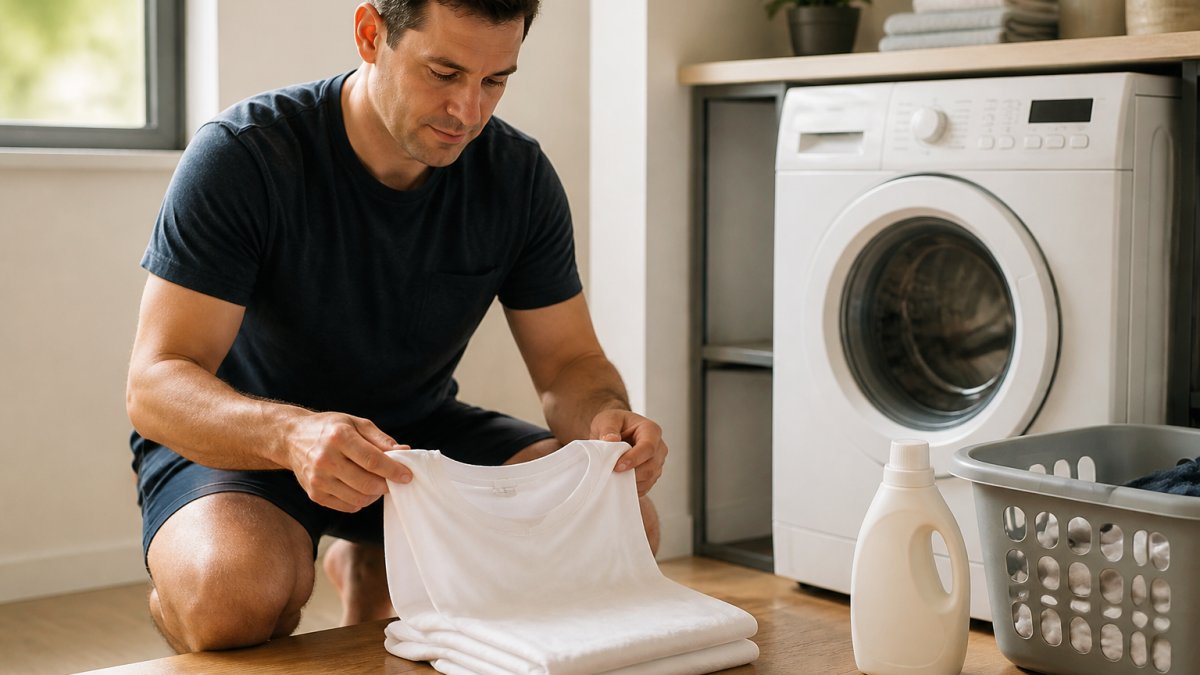
What Each Laundry Variable Does to the Barrier
- Water temperature. Cold water (around 20°C or below) keeps the adhesive and coating stable. Hot water, anything above roughly 40°C, softens the bond and accelerates delamination at the panel edges. Most care labels on bonded garments specify cold or warm, never hot.
- Detergent type. A mild liquid detergent rinses clean. Powder detergents with built-in bleach or oxygen boosters are harsher on the coating. Avoid anything labelled "with bleach" or "oxy action" unless the care label explicitly allows it.
- Fabric softener. This is the most common mistake. Softener leaves a waxy film on the sweat-blocking panel, and that film stops the barrier from doing its job. The shirt looks fine, but it stops protecting.
- Cycle length and agitation. A normal cycle with heavy towels creates friction that rubs the underarm shield thin. A gentle or delicate cycle with similar-weight items reduces that wear.
How to Read the Care Label on a Sweat-Proof Shirt
Care labels on bonded garments usually carry a small set of symbols. The ones that matter most for lifespan are the wash tub with a number (the maximum temperature), the triangle (bleach, crossed out means do not bleach), and the tumble-dry square with dots (the number of dots indicates heat level). A label that shows a tub with 30 and one dot in the dryer square is telling you the manufacturer expects the barrier to survive 30°C washing and low-heat drying.
A Wash Routine That Adds Months
Our own Neat™ undershirts are built to tumble dry without shrinking, but that does not mean you should cook them. A few habits add months to the life of any sweat-proof shirt:
- Turn the shirt inside out before washing.
- Skip fabric softener. It coats the barrier and blocks absorption.
- Avoid bleach and hot water.
- Wash with similar colours, not heavy items like towels.
How Many Washes Before the Barrier Starts to Go?
There is no single published wash-cycle rating for sweat-proof undershirts the way there is for, say, waterproof jackets. But a useful way to think about it is in wash cycles rather than months.
A regular undershirt has no barrier to lose, so it "lasts" until the cotton thins. A sweat-proof shirt has a working life tied to its protective layer, which is a different clock entirely.
How Often to Replace Undershirts: Signs It's Time for New Ones
Replace an undershirt when sweat starts reaching your outer layer again, when the underarm panel feels stiff or cracked, or when the fabric has thinned enough to go see-through.
Watch for these signs:
"Pit Stopper" Neat™ Crew Neck Undershirt →
- Sweat marks appear on your dress shirt again.
- The underarm shield feels bumpy or stiff.
- The cotton has yellowed or greyed.
- The fit has stretched and it no longer tucks cleanly.
If you wear a shirt two or three times a week, that is roughly 100 to 150 washes a year. Most people hit the replacement point somewhere in that second year.
Factors That Change How Long Your Sweat Proof Undershirt Lasts
How long a sweat proof undershirt lasts depends on five things: wash frequency, water temperature, drying method, how much you sweat, and how tight your outer clothing fits. Change any one of them and the timeline shifts.
Here is how each factor moves the needle:
| Factor | Slower Wear | Faster Wear |
|---|---|---|
| Wash temperature | Cold water | Hot water |
| Drying | Air dry or low heat | High heat |
| Wash frequency | Weekly | Daily |
| Sweat volume | Light | Heavy or hyperhidrosis |
| Outer fit | Relaxed | Tight and rubbing |
Putting a Number on Each Factor
A table is only useful if you know how much each row actually costs you. Based on how bonded barriers typically behave, here is the rough direction and size of each effect:
- Wash temperature. Moving from cold to hot water is the single biggest accelerator. It can shorten barrier life by roughly a third compared with cold washing, because heat attacks the adhesive bond directly.
- Drying method. Tumble drying on high heat is the second biggest. Air drying instead can add several months of useful life to the same shirt.
- Wash frequency. Going from weekly to daily washing roughly doubles the number of cycles per year, which compresses the calendar lifespan proportionally. The barrier does not care about weeks, it cares about cycles.
- Sweat volume. Heavy sweaters and people with hyperhidrosis put more moisture, salt and friction through the panel per wear. Expect the lower end of the range, often closer to 12 months than 18.
What a Realistic Range Looks Like
Combining those factors gives a more honest picture than a single number:
- Best case, cold wash, air dry, worn once or twice a week, light sweating, relaxed outer fit: 18 to 24 months of reliable protection.
- Typical case, cold or warm wash, low tumble dry, worn most days, moderate sweating: 12 to 18 months.
- Hard-use case, warm or hot wash, high tumble dry, worn daily, heavy sweating or hyperhidrosis, tight outer shirts: 6 to 12 months.
If you have hyperhidrosis, expect the lower end of the range. Heavy daily sweat puts more strain on the barrier and the fabric around it. The good news is that a well-made shirt still holds up for a full year of hard use.
The Factor Most People Overlook: Fit
Fit does double duty. A shirt that is too loose bunches under the arms and creates friction against the outer layer. A shirt that is too tight stretches the panel and pulls the bonded edges away from the cotton. The sweet spot is a fitted cut that stays smooth under a dress shirt without compressing the underarm shield. That is also why a shirt that fits well at purchase can start to wear faster once it stretches out, the barrier is no longer sitting flat against the skin where it was designed to sit.
How to Tell Which Factor Is Hurting You Most
If your shirts are failing early, work backwards:
- Panel edges lifting or curling? Suspect heat, check your wash temperature and dryer setting first.
- Panel feels stiff or cracked in the middle? Suspect detergent or fabric softener build-up.
- Panel still feels fine but sweat is getting through? Suspect fit, the barrier may have shifted out of position rather than degraded.
- Shirt smells even after washing? Suspect inadequate rinsing or a detergent that is not lifting residue from the panel.
Warranty, Performance Guarantees, and Replacement Policies
Check the warranty before you buy, and check what it actually covers. A performance guarantee usually covers defects in the barrier, not normal wear. Read the fine print on wash instructions, because most guarantees are void if you ignore the care label.
What to look for:
- How long the guarantee runs.
- Whether it covers the sweat-blocking layer or just stitching.
- What proof of purchase they need.
- Whether care-label mistakes void the claim.
For reference, the ACCC guide to consumer guarantees explains your rights when a product fails to do what it promised, and those rights sit alongside any manufacturer warranty. Keep your receipt.
Conclusion: Getting the Most Wear From Your Investment
A sweat proof undershirt is a working garment, not a forever garment. Treat the barrier well and you get a year or more of reliable protection. Treat it badly and you will be replacing it in months.
That is the whole case for buying well. Our Pit Stopper Neat™ Crew Neck Undershirt pairs triple-layer underarm protection with a fitted cut that tucks cleanly under a dress shirt, and it tumble dries without shrinking. The Neat™ Intro Pack gives you a white undershirt and a black tee to start with.


Frequently Asked Questions
How can you tell when a sweat-proof undershirt needs replacing?
Look for three signs: persistent odour that lingers after washing, visible thinning or delamination in the underarm shield area, and sweat marks appearing through the fabric even when you know the shirt is dry. If you notice any of these, the sweat-blocking layers have degraded. Most quality sweat proof undershirts last 12 to 18 months with regular wear, so if yours is approaching that window and showing these signs, it's time for a replacement.
Does washing make sweat-proof technology less effective?
Yes, but gradually. Every wash cycle puts stress on the fabric and any bonded underarm shields. Hot water, harsh detergents, and high-heat tumble drying accelerate this. To slow the decline, wash in cold or warm water on a gentle cycle, skip fabric softener (it coats the fabric and reduces moisture management), and tumble dry on low or hang to dry. A sweat proof undershirt washed this way will maintain its performance far longer than one washed in hot water and dried on high.
Do sweat-proof undershirts work for heavy sweaters and people with hyperhidrosis?
They do, but the technology has limits. A sweat proof undershirt with a triple-layer underarm shield, like the Pit Stopper Neat range, blocks sweat from passing through to your outer shirt for several hours of normal daily wear. For hyperhidrosis, you may need to change the undershirt once during the day. The shirt manages moisture and protects your outer clothing, but it doesn't stop you from sweating. Pairing it with an antiperspirant gives the best all-day result.
How often should I replace undershirts if I wear them daily?
If you wear the same sweat proof undershirt every day and wash it weekly, expect to replace it every 12 to 18 months. Rotating through three or four shirts spreads the wear and extends each one's life. If you notice the underarm shield peeling, the fabric thinning, or odour that won't wash out, replace that shirt regardless of how long you've had it. Buying a 4-pack and rotating is the most cost-effective approach for daily wearers.