




Why Dress Shirts Show Sweat: Fixes That Actually Work

Table of Contents
- Why Dress Shirts Show Sweat: The Fabric Science Behind Visible Patches
- How Light Travels Through Wet Fabric
- The Role of Colour and Contrast
- Fabric Breathability vs. Moisture Management: What Actually Keeps You Dry
- Sweat Proof Undershirts for Men: The Layer That Changes Everything
- How to Remove Sweat Stains from White Shirts (Without Ruining Them)
- Why Do My Shirts Feel Stiff After Washing? (And How to Fix It)
- Styling Strategies: Colours, Patterns, and Fit That Hide Sweat
- Managing Hyperhidrosis: When Sweat Needs More Than Fabric
- Frequently Asked Questions
Last Updated: September 23, 2026
Why Dress Shirts Show Sweat: The Fabric Science Behind Visible Patches
A dress shirt shows sweat because light behaves differently when it hits wet fabric. This guide from Sweat Proof Apparel explains why dress shirts show sweat, then gives fixes that hold up in real meetings.

Dry cotton scatters light evenly, so the surface looks uniform. Add moisture and the fibres swell and let more light pass through, so the wet patch reads darker.
So the fix is not always "sweat less." Often it is changing the fabric, the colour, or the layer underneath.
Moisture management is how a fabric moves sweat away from your skin and helps it evaporate. Cotton absorbs well but dries slowly, which is why it clings and darkens.
How Light Travels Through Wet Fabric
Light is why a wet patch looks so obvious: dry fabric bounces light back at the eye, wet fabric lets it pass through.
- Dry cotton: scatters light, looks opaque
- Wet cotton: transmits light, looks translucent
- Thin white fabric: shows the effect fastest
- Dense weave: hides it longer
The Role of Colour and Contrast
Colour decides how badly a patch shows. High contrast between wet and dry areas makes sweat obvious. Low contrast hides it.
| Shirt Colour | How Well It Hides Sweat | Why |
|---|---|---|
| White | Poor | Turns grey and translucent |
| Light grey | Good | Low contrast when wet |
| Navy | Good | Darker tone masks patches |
| Black | Very good | Minimal visible contrast |
| Bold patterns | Very good | Breaks up the outline |
Fabric Breathability vs. Moisture Management: What Actually Keeps You Dry
Breathability and moisture management are not the same thing, which is why so many "cool" shirts still show patches.
Weave and Weight: The Variables Most Guides Skip
Two shirts can be the same fibre and behave differently, because weave density and fabric weight decide how heat and moisture move.
- Poplin is a plain, tight weave with a smooth, crisp hand. It is light and breathable, but the tight structure means a wet patch spreads and reads clearly.
- Twill is a diagonal weave with more yarn density. It hides marks better than poplin but holds more heat, as there is less open space for air.
- Oxford is a basket weave with a rougher, more open texture that breaks up light reflection, so patches are less obvious and it breathes reasonably well.
- Broadcloth is close to poplin but denser, so it looks sharp and shows sweat quickly.
Natural vs. Synthetic Fibres
Natural fibres like cotton feel soft and absorb sweat well, but they hold onto it, which is why cotton shows patches for a long time and clings once damp. Linen breathes exceptionally well and dries faster, but wrinkles and offers little structure.
Moisture-Wicking Technology Explained
Moisture-wicking fabric pulls sweat from your skin to the outer surface, where it spreads and evaporates faster. This is moisture transport, and it depends on how quickly the fabric moves liquid (wicking rate) and how much it holds before feeling wet (absorbency).
Why Wrinkle-Free Fabrics Trap Heat
Wrinkle-free shirts are treated with a resin finish that stiffens the fibre and reduces open space in the weave. That cuts airflow and traps body heat, so you sweat more while the shirt moves moisture poorly.
Sweat Proof Undershirts for Men: The Layer That Changes Everything
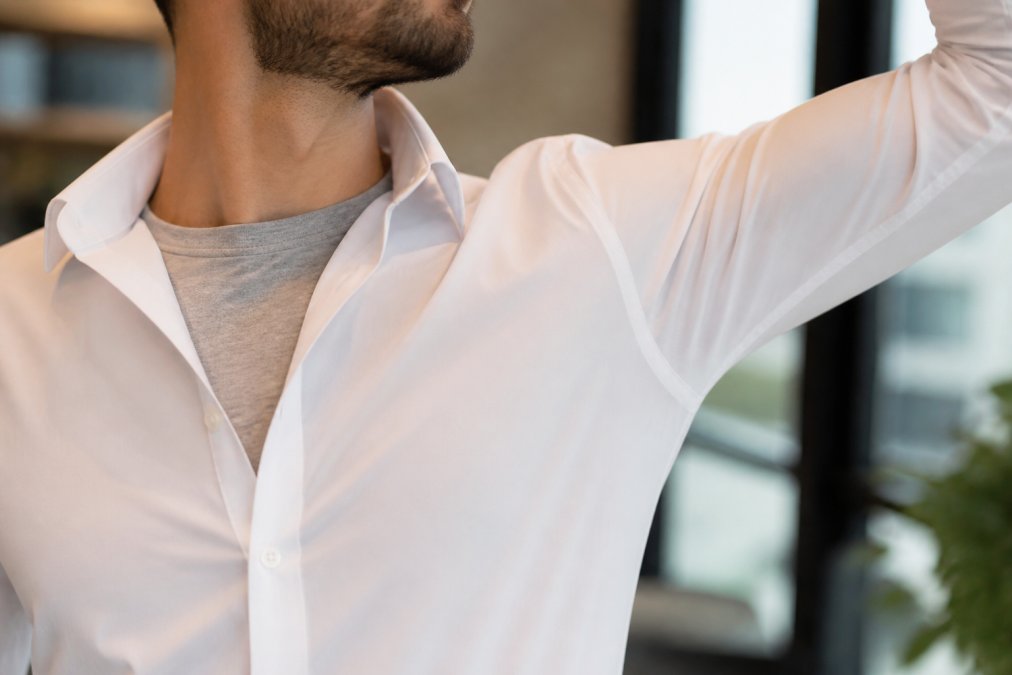
The fastest fix is a layer under the shirt. A sweat proof undershirt for men blocks moisture before it reaches the dress shirt, so the outer fabric stays dry.
How Triple-Layer Underarm Protection Works
Triple-layer underarm protection uses a built-in shield at the underarm, the area that shows first. The layers block moisture from passing through to your shirt.
How to Remove Sweat Stains from White Shirts (Without Ruining Them)
Act fast: fresh stains lift easily, while old yellow stains need more work.
"Pit Stopper" Neat™ Crew Neck Undershirt →
- Rinse the area in cool water to flush out fresh sweat.
- Mix a paste of bicarb soda and water.
- Work it gently into the stain with an old toothbrush.
- Let it sit for 30 minutes.
- Wash as normal on a cool cycle.
- Check before drying. Heat sets a stain for good.
Treating Yellow Underarm Stains
Yellow stains come from a reaction between sweat and the aluminium in antiperspirant, building up over time.
Why Do My Shirts Feel Stiff After Washing? (And How to Fix It)
Shirts feel stiff after washing because of leftover detergent, hard water minerals, or a heavy wrinkle-free finish. The fibre dries rigid instead of soft.
The fix is usually in your wash routine:
- Use less detergent, not more
- Skip the fabric softener, which coats fibres
- Add a half-cup of white vinegar to the rinse
- Shake the shirt out before hanging
- Air-dry on a hanger rather than a hot dryer
Styling Strategies: Colours, Patterns, and Fit That Hide Sweat
A good fit and smart colours do more than any single fabric: loose shirts let air move, mid-tone colours hide contrast, and patterns break up a patch's outline. But the biggest gains come from layering and post-purchase care.
Fit and Airflow
Start with fit. A garment fit that leaves room at the underarm lets air circulate; too tight traps heat, too loose bunches and holds moisture. The sweet spot skims the body without pulling across the chest or under the arms.
Best Colours to Hide Sweat Marks
Pick mid-tones over bright white or pale pastels. Light grey, navy, dusty blue, and olive hide patches well because the wet shade stays close to the dry shade.
Layering for Professional Settings
Layering is the move most guides skip, and it holds up in a real office: it puts a barrier between you and the shirt and lets you control airflow without changing the shirt.
- Start with a sweat-blocking undershirt as the base layer.
- Add the dress shirt on top, choosing a mid-tone or patterned weave.
- Choose a breathable blazer or vest over a heavy, lined jacket; unlined or half-lined lets heat escape.
- Keep a spare jacket or overshirt for high-stakes meetings as a clean layer to swap in.
- Skip the tight belt and heavy fabrics that trap heat around the waist.
Post-Wash Care for Performance Fabrics
Performance shirts lose their wicking ability over time, usually thanks to fabric softener. Softener coats the fibres and blocks the surface that moves moisture, so a shirt that worked when new starts to feel clammy and show patches again.
To keep a performance shirt working:
- Skip fabric softener and dryer sheets entirely.
- Use a mild detergent and avoid over-dosing.
- Wash cool to protect any surface treatment.
- Air-dry where possible, or use low heat.
- Avoid chlorine bleach, which degrades performance fibres.
Managing Hyperhidrosis: When Sweat Needs More Than Fabric
Hyperhidrosis is a medical condition causing sweating beyond what your body needs for temperature control. It is not about fitness or nerves, and it is not your fault.
- A sweat-blocking base layer keeps outer shirts dry
- Mid-tone and patterned shirts hide contrast
- Breathable weaves reduce heat build-up
- A spare shirt in the car or office is cheap insurance
Frequently Asked Questions
How to stop sweat from showing on a dress shirt?
The most reliable method is wearing a sweat proof undershirt as a base layer. These garments use moisture-wicking fabric and often feature triple-layer underarm protection to block sweat from reaching your outer shirt. Choose undershirts made from technical fabrics rather than plain cotton, as they transport moisture away from your skin faster. Pair this with an antiperspirant applied at night, not just in the morning, to reduce sweat production at the source.
What shirt material doesn't show sweat?
Dark colours in cotton-polyester blends hide sweat best because the fabric doesn't become transparent when wet, and the colour masks darkening. Pure linen and lightweight cotton show sweat quickly because they're highly absorbent and become translucent. Performance fabrics with moisture-wicking properties move sweat to the surface where it evaporates fast. For dress shirts, look for cotton blends with at least 30% synthetic fibres like polyester or spandex to balance breathability with moisture management.
Why do my shirts feel stiff after washing?
Stiffness after washing usually comes from detergent residue, hard water minerals, or fabric softener buildup that coats the fibres. Overloading the washing machine prevents proper rinsing, leaving soap trapped in the weave. To fix it, run an extra rinse cycle, reduce detergent to two-thirds of the recommended amount, and add half a cup of white vinegar to the rinse cycle. For sweat proof undershirts, avoid fabric softener entirely because it clogs the moisture-wicking technology.
Do sweat proof undershirts for men actually work for heavy sweaters?
Yes, but effectiveness depends on the construction. Look for undershirts with dedicated underarm shields rather than just moisture-wicking fabric alone. Products like the Pit Stopper Neat Crew Neck Undershirt use a fitted construction and extra underarm shield to block sweat from passing through to your dress shirt. The 95% premium cotton and 5% spandex blend tumble dries without shrinking, so the fit stays consistent. For hyperhidrosis, these undershirts manage the visible symptoms while you address the root cause separately.