




Minimal Shrinkage vs Sweat Hiding: Which Shirt Wins

Quick Summary
Sweat-proof shirts that keep their fit after repeated washing and still hide sweat are the best choice for most buyers. Sweat Proof Apparel's Neat fabric, a 95% cotton and 5% spandex blend, is listed as tumble drying without shrinking, and fitted Pit Stopper undershirts block sweat beneath other garments.
- Neat fabric is listed as 95% premium cotton and 5% spandex.
- The Neat tees are listed as tumble drying without shrinking.
- Wash cold on a gentle cycle to help the garment keep its size.
- Pit Stopper undershirts sit close to the body and block sweat before it reaches the outer shirt.
- The 4-Pack costs $181.50 AUD, roughly $45.40 AUD per shirt.
Table of Contents
- Why Shrinkage and Sweat Hiding Pull Against Each Other
- How Fabric Construction Affects Both Shrinkage and Sweat Show-Through
- Side-by-Side Comparison: Neat Fabric Options Across Repeated Washing
- How to Prevent Clothes from Shrinking Without Losing Sweat Protection
- How Sweat, Friction and Heat Affect Skin Irritation
- Chafing and Heat Rash Prevention: Choosing the Right Layer
- Choosing Your Sweat-Proof Shirt for Shrinkage-Free Wear
- Frequently Asked Questions
Sweat Proof Apparel's comparison of minimal shrinkage after washing and sweat-hiding performance is a practical question for anyone buying sweat-proof shirts to stop sweat showing and skin irritation. A shirt that keeps its fit after repeated washing but lets sweat show through does not solve the problem, and neither does one that hides sweat but shrinks in the wash. This guide looks at both properties together, using the Neat™ range as the reference point.
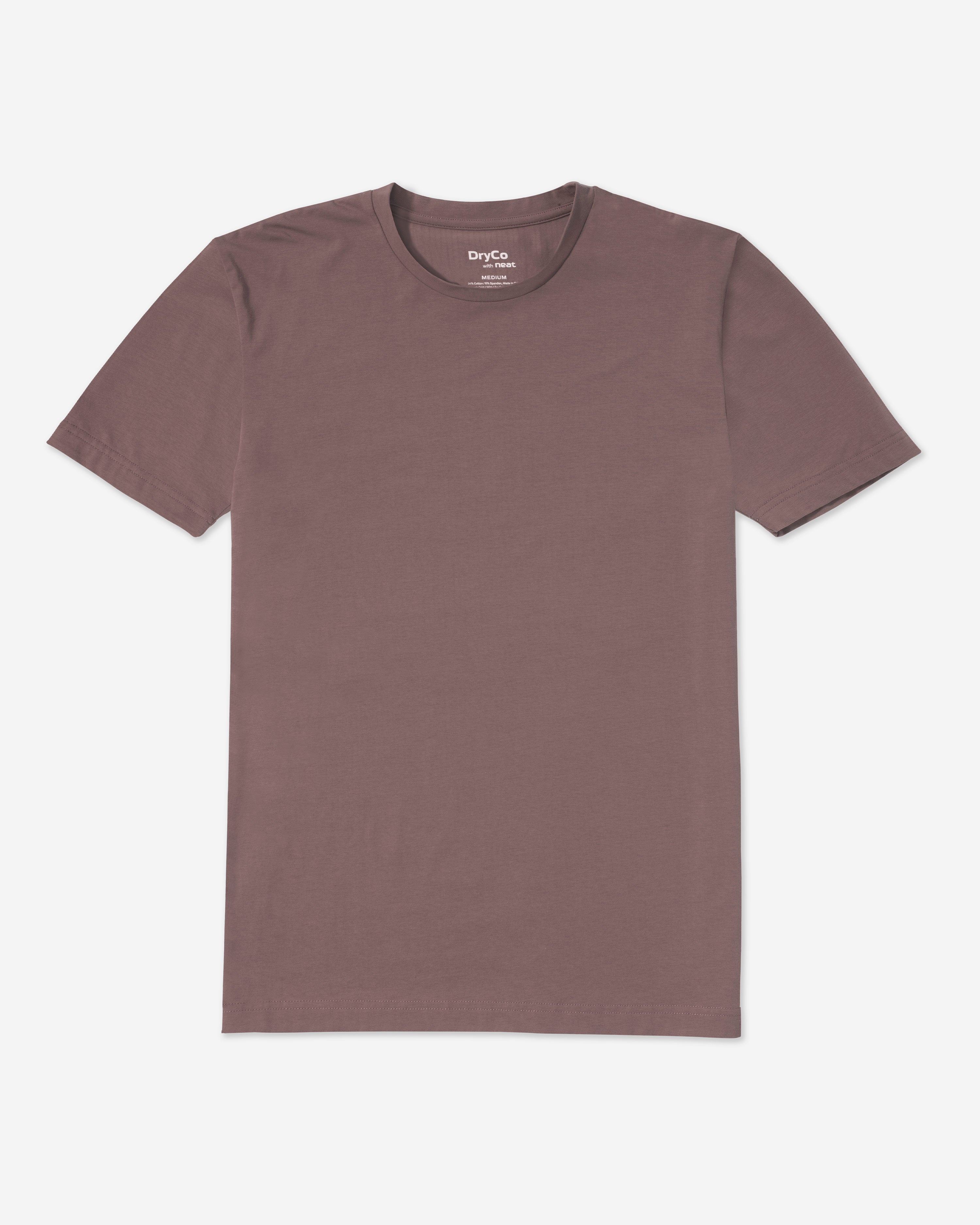
Sweat Proof Apparel designs its technical tees and undershirts around the Neat™ Fabric, which the product listings describe as a blend of 95% premium cotton and 5% spandex. The listings say these tees "tumble dry without shrinking." Sweat-hiding is the other, and the sections below explain how the two interact.
Why Shrinkage and Sweat Hiding Pull Against Each Other
Shrinkage and sweat hiding do not always move in the same direction. A fabric that is dense and tightly knit tends to resist sweat showing through, but it can also be the kind of fabric that changes size when it is washed hot or dried in a machine. A looser knit may recover its shape well, yet let moisture spread more easily across the shirt.
For most shoppers, the practical goal is a sweat-proof shirts option that keeps its size and still conceals sweat after many wash cycles. The right balance depends on fibre content, knit construction and how the garment is cared for. Neither property should be judged from a single wash.
How Fabric Construction Affects Both Shrinkage and Sweat Show-Through
The listed construction of the Neat™ range is 95% cotton and 5% spandex. That ratio matters because the two fibres behave differently in the wash. Cotton is a natural fibre that absorbs water and can contract when dried with heat, while spandex adds elastic recovery.
Knit density is the second lever. A tighter, denser knit resists sweat showing through because moisture has less open space to spread across the surface, but dense knits can also be less breathable and may shrink more noticeably if washed hot. A looser knit recovers shape more easily and breathes better, yet lets moisture wick across the fabric more readily, which can make sweat visible sooner. The "Pit Stopper" undershirts are described as having a fitted construction and, in the upgraded design, an extra underarm shield.
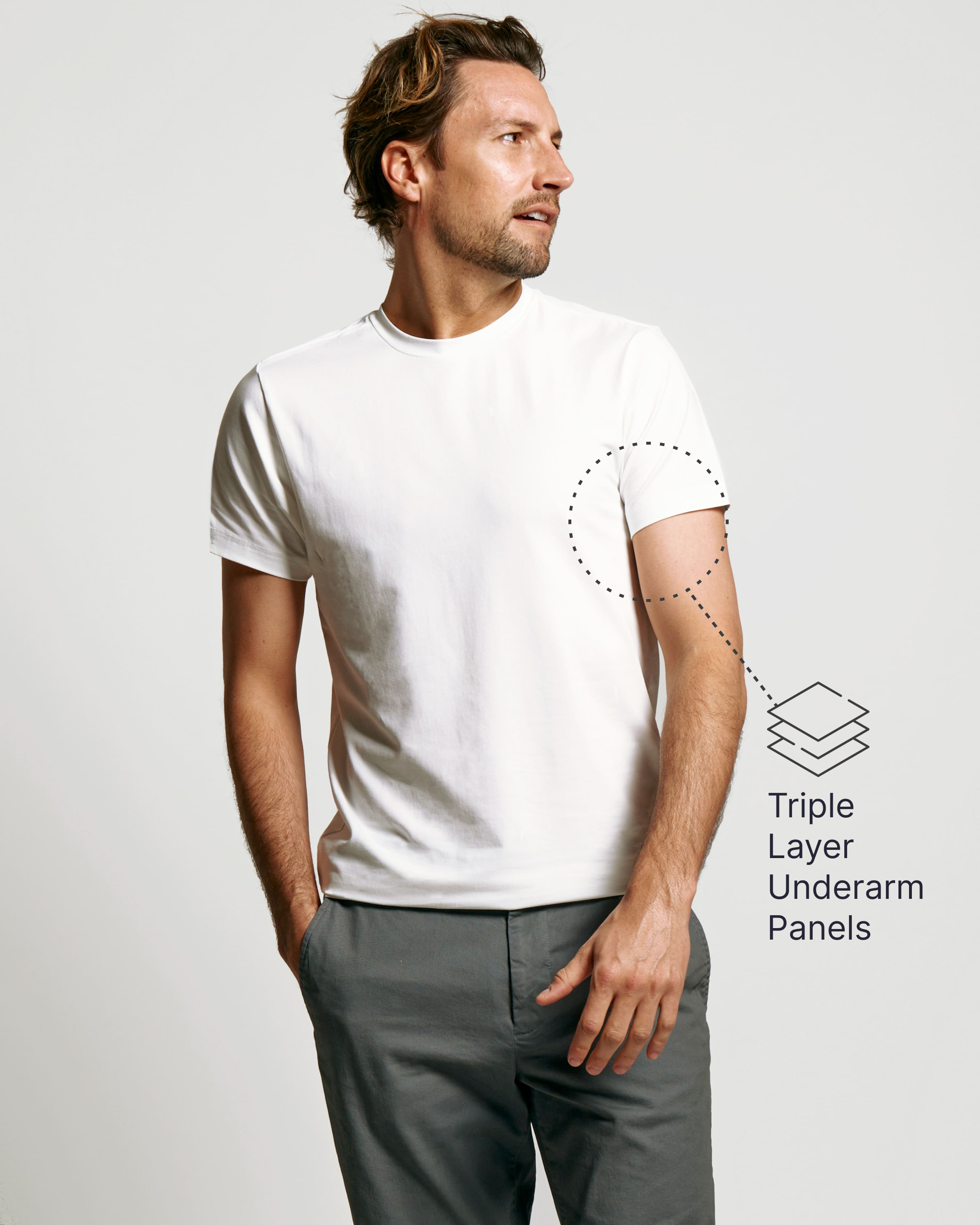
The listings also note that white is transparent, so a damp-looking patch can appear even when the fabric is dry. That is a useful reminder to judge sweat concealment on the fabric's behaviour and construction, not on appearance alone. Check the care label on the garment you buy before washing it.
Side-by-Side Comparison: Neat Fabric Options Across Repeated Washing
The Sweat Proof Apparel range offers several Neat™ options. The table below compares them on the properties covered by the listings.
| Product | Price (AUD) | Layer | Sweat-hiding claim | Shrinkage claim | Best for |
|---|---|---|---|---|---|
| "Sweat Defender" Neat™ Crew T-Shirt | $59.99 | Outer tee | Hides sweat from the inside out | Tumble dries without shrinking | Wearing alone in casual settings |
| Neat™ T-Shirt 4-Pack | $181.50 | Outer tee | Hides sweat; quick dry | Same fabric as the single tee | Buying a full set of colours in one size |
| "Pit Stopper" Neat™ Crew Neck Undershirt | $55.00 | Undershirt | Blocks sweat; extra underarm shield on upgraded design | Tumble dries without shrinking | Wearing under dress shirts and polos |
| "Pit Stopper" Neat™ V-Neck Undershirt | $55.00 | Undershirt | Blocks sweat; extra underarm shield on upgraded design | Tumble dries without shrinking | Wearing under open-neck shirts |
| Neat™ Women T-Shirt | $55.00 | Outer tee | Hides sweat; quick dry | Tumble dries without shrinking | Women wearing under fitted blouses |
Price (AUD)
Comparison matrix: shrinkage, sweat hiding and drying
| Criterion | Crew T-Shirt | 4-Pack | Crew Undershirt | V-Neck Undershirt | Women T-Shirt |
|---|---|---|---|---|---|
| Shrinkage after washing (per listing) | Tumble dries without shrinking | Same fabric | Tumble dries without shrinking | Tumble dries without shrinking | Tumble dries without shrinking |
| Sweat hiding (per listing) | Yes | Yes | Yes, as an undershirt | Yes, as an undershirt | Yes |
| Quick drying (per listing) | Not stated | Quick dry | Not stated | Not stated | Quick dry |
| Visible when worn alone | Standard | Standard | May look damp when white | May look damp when white | Standard |
How to Prevent Clothes from Shrinking Without Losing Sweat Protection
Follow the care label first, then these general steps:
- Wash cold on a gentle cycle. Heat is the main cause of shrinkage in cotton blends, so cold water helps the garment hold its size. For more detail on each step, see how to stop dress shirts shrinking after washing.
- Turn the shirt inside out. This reduces friction on the surface where the sweat-hiding finish sits.
- Avoid harsh detergents and bleach. Strong chemicals can break down performance finishes over time.
- Tumble dry on low, or air dry. The listings say the Neat™ tees tumble dry without shrinking, but low heat is still the safer setting.
- Do not leave damp shirts in a heap. Hang or lay them flat once the cycle ends.
Following these steps helps keep the fit consistent, which matters for the undershirts because a looser fit lets sweat spread.
How Sweat, Friction and Heat Affect Skin Irritation
Skin irritation from clothing usually comes from a combination of moisture, friction, and heat rather than from fabric alone. Sweat left on the skin softens the outer layer, which lowers its resistance to rubbing; a garment that then moves against the skin can cause chafing. Where moisture is trapped against the body for long periods, heat rash can develop. The practical variables you can control are drying time, fit, fabric texture, and breathability.
Drying time is the variable most often overlooked. A fabric that holds moisture against the skin extends the period of softening and friction, while a quick-drying layer moves moisture away and reduces that window. The listings describe the Neat™ tees as quick dry, which is relevant here because faster drying means less time with damp fabric against the skin. Fit matters next: a looser garment lets sweat spread and creates more rubbing surface, while a fitted layer such as the "Pit Stopper" undershirt sits close to the body and blocks sweat before it reaches the outer shirt. Fabric texture is the third factor: smooth, flat knits create less friction than rough or raised surfaces, which is why a close-fitting undershirt is often chosen as the layer nearest the skin.
No garment alone treats a skin condition. If irritation is persistent or severe, a doctor or pharmacist should assess it.
Chafing and Heat Rash Prevention: Choosing the Right Layer
Choosing the right layer depends on where the irritation happens and what you wear over it:
-
For sweat under a dress shirt, a fitted undershirt such as the Pit Stopper Crew Neck or V-Neck is designed to be worn beneath the dress shirts and polos you normally sweat through.
-
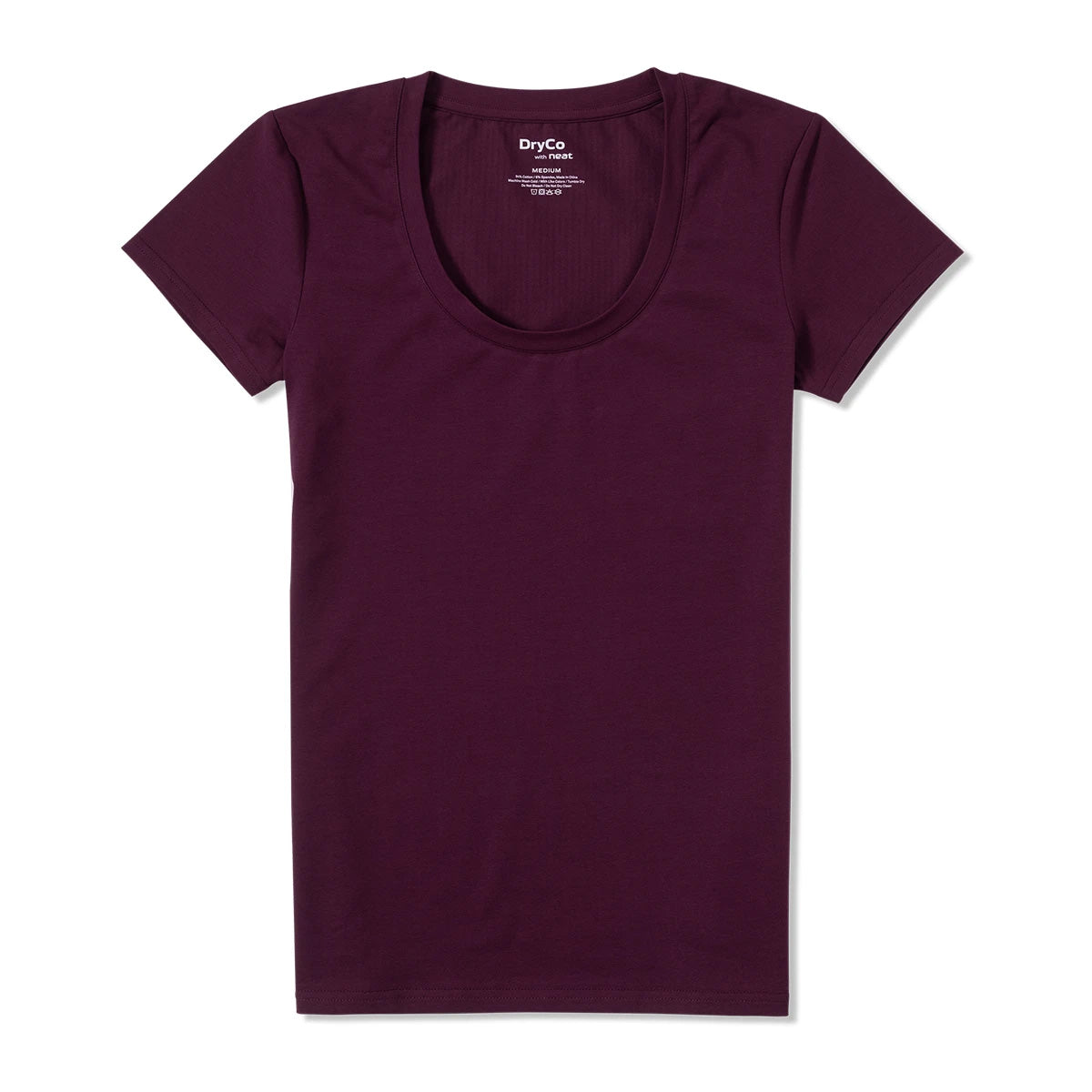
For women wearing fitted tops, the Neat™ Women T-Shirt has a scoop neck and is listed as suitable for wear under fitted clothing.
Wear the Pit Stopper undershirt as a sweat-blocking layer underneath another garment, since white is transparent and can look wet even when dry.
Choosing Your Sweat-Proof Shirt for Shrinkage-Free Wear
Start by deciding where the shirt will be worn. If sweat shows under a dress shirt, the Pit Stopper undershirt is the layer to buy, since it is designed to sit beneath the shirt. If you want a shirt that works on its own, the Sweat Defender Crew T-Shirt is the better choice.
Next, consider the fit. The undershirts and tees are made from Neat™ Fabric, so the choice comes down to neckline, layer and price. If you wear the same style regularly, the 4-Pack gives you four tees in one size for $181.50 AUD, which works out to a little under $45.40 AUD per shirt.
Finally, follow the care steps above. For questions about sizing or care, our team at Sweat Proof Apparel is happy to help you choose the right layer for your needs.
Frequently Asked Questions
Can sweat-wicking or sweat-proof clothing help prevent skin irritation?
It can help. Sweat left against the skin softens it and increases friction, which is what drives chafing and heat rash. Keeping the skin drier and reducing rubbing can lower that risk, particularly during long days or warm weather. It does not treat an existing rash or an underlying skin condition, though. If irritation persists, lasts more than a few days, or spreads, see a pharmacist or GP.
What fabrics are less likely to shrink in the wash?
The Neat Crew T-Shirt and the Pit Stopper undershirts are made from 95 per cent premium cotton and 5 per cent spandex, and the care information states they tumble dry without shrinking. Even so, the amount of shrinkage depends on wash temperature, cycle length and drying heat. Washing in cool water on a gentle cycle and avoiding high-heat drying will keep the fit closer to how it was when new.
How should sweat-proof shirts be washed to minimise shrinkage?
Wash in cool or lukewarm water on a gentle cycle, and turn the garment inside out to reduce abrasion on the outer face. Follow the care label on the specific garment you own.
Is a tight or loose shirt better for preventing chafing?
A fitted shirt that sits close to the body without restricting movement usually causes less chafing than a loose one. Loose fabric shifts and bunches, creating friction at the underarms and waistline, while a tight shirt that pulls can rub and trap sweat. A snug, smooth fit that tucks under dress shirts and polos keeps the layer in place, which is why the Pit Stopper undershirts are cut to tuck. Check the fit when seated and when lifting your arms before deciding.
