




How to Prevent Deodorant Stains on Shirts: 2026 Guide

Table of Contents
- Why Deodorant Stains Happen and How to Stop Them
- How to Apply Deodorant So It Doesn't Stain Your Shirts
- Choosing the Right Formula: Antiperspirant vs Deodorant
- Why Do My Shirts Feel Stiff After Washing?
- How to Remove Yellow Sweat Stains from White Shirts
- Best Sweat-Proof Undershirts for Men to Prevent Deodorant Stains
- Conclusion
- Frequently Asked Questions
Last Updated: September 28, 2026
Why Deodorant Stains Happen and How to Stop Them
Deodorant stains on shirts are the chalky white marks or yellow patches that form when antiperspirant residue, sweat and fabric fibres react together. This guide from Sweat Proof Apparel breaks down why they happen and how to prevent deodorant stains on shirts for good.

The fix starts with understanding what you're actually fighting. Two different problems, two different causes.
White marks come from the solid ingredients in antiperspirant. Aluminum salts sit on the skin surface to block sweat. When they rub against fabric, they leave a chalky trail.
Yellow stains are a chemical reaction. Sweat proteins mix with those same aluminum salts, and over time they bond to the fabric. Once that bond sets, it's hard to shift.
Fabric makes it worse. Synthetic fabrics trap residue near the surface. Natural fibers like cotton absorb it deeper.
The Chemistry Behind White Marks and Yellow Stains
Aluminum salts are the main culprit behind both stains. They're the active ingredient in most antiperspirants.
The reaction works like this:
- Aluminum salts dissolve in sweat on the skin
- They form a gel-like plug in the sweat duct
- Residue transfers to fabric on contact
- Sweat proteins bind with the salts and oxidise
- Oxidation turns the residue yellow over time
Body chemistry matters too. Some people's sweat is more acidic, which speeds up the yellowing.
How to Apply Deodorant So It Doesn't Stain Your Shirts
The way you apply deodorant matters more than which brand you buy. Most stains come from user error, not the product itself.
Follow these steps:
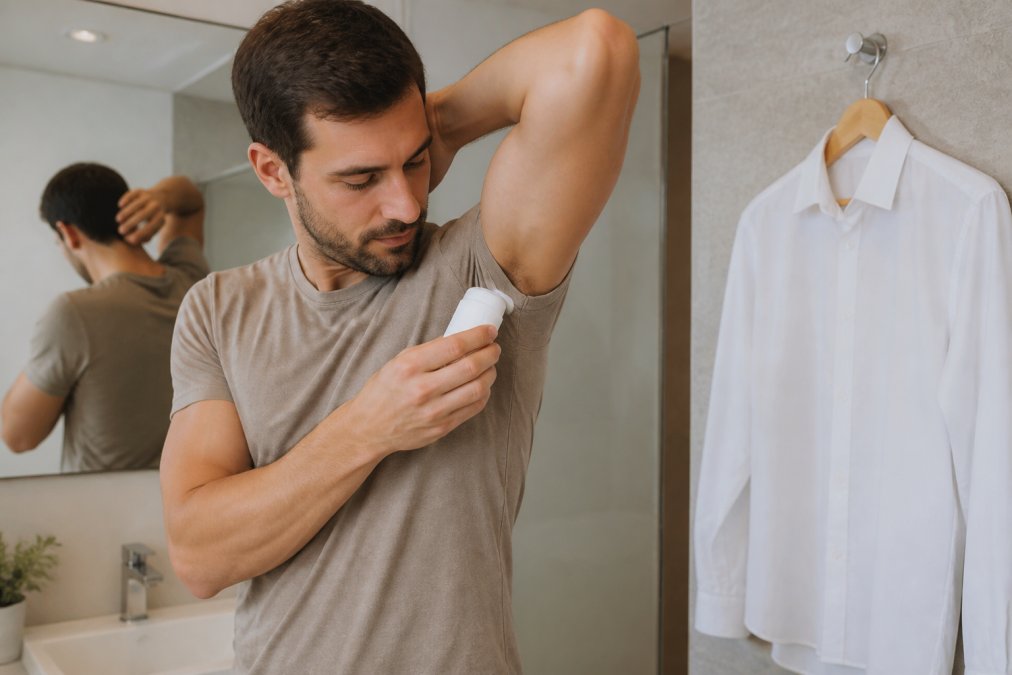
- Apply to clean, dry skin. Damp underarms stop the product absorbing properly.
- Use a thin layer. Two or three light strokes is enough. More product means more residue.
- Let it dry completely before dressing. This is the step most people skip.
- Don't reapply during the day unless you really need to. Layering builds up residue.
- Dress in order: undershirt first, then your dress shirt.
Drying Time Before You Get Dressed
Wait 2 to 3 minutes before pulling on a shirt. That's how long most antiperspirants need to fully dry.
If you're in a rush, use a hairdryer on the cool setting for 30 seconds. It sounds odd, but it works.
A common mistake is dressing while the product is still tacky. That's when transfer happens. The residue grabs the fabric and sets in.
Choosing the Right Formula: Antiperspirant vs Deodorant
Antiperspirants block sweat. Deodorants mask odour. Only one of them causes most stains.
If yellow stains are your problem, aluminum is the issue. Switching to an aluminum-free deodorant removes the main cause. But you'll still sweat.
Clear gel and invisible solid formulas leave less visible residue than white solids. They dry faster too.
| Formula | Stains? | Blocks Sweat? | Best For |
|---|---|---|---|
| Antiperspirant (white solid) | Yes, worst offender | Yes | Heavy sweaters |
| Antiperspirant (clear gel) | Less visible | Yes | Daily office wear |
| Aluminum-free deodorant | Minimal | No | Sensitive skin |
| Natural deodorant | Minimal | No | Mild sweating |
The trade-off is real. Going aluminum-free stops the yellowing, but you'll need another way to manage moisture.
Why Do My Shirts Feel Stiff After Washing?
Shirts feel stiff after washing because residue builds up in the fabric. This is residue buildup from three sources: deodorant, laundry detergent and hard water minerals.
The fix is simpler than you'd think.
- Use less detergent. Most people use double what they need.
- Skip fabric softener. It coats fibres and traps residue.
- Add half a cup of white vinegar to the rinse cycle.
- Wash in warm water, not hot.
- Do an extra rinse cycle on heavy loads.
Vinegar solution breaks down the alkaline residue that detergent leaves behind. It also softens fabric without coating it.
If shirts still feel stiff after that, you're likely overloading the machine. Give clothes room to move.
How to Remove Yellow Sweat Stains from White Shirts
Yellow sweat stains come out with the right pre-treatment for the right fabric. The key is acting before you wash, not after, and matching the method to the fibre.
"Pit Stopper" Neat™ Crew Neck Undershirt →
For Cotton and Cotton Blends
This is the most forgiving fabric and the one most home remedies are written for.
- Mix one tablespoon of baking soda with enough water to make a paste.
- Work it into the stain with an old toothbrush.
- Add a few drops of hydrogen peroxide for stubborn marks.
- Let it sit for 30 minutes.
- Wash as normal with an enzyme-based cleaner.
For older stains, soak the shirt in a vinegar solution overnight before treating. A 1:4 white vinegar to water ratio is strong enough to break down the alkaline residue without damaging the cotton.
For Silk and Wool
Do not use baking soda paste, hydrogen peroxide or a toothbrush on silk or wool. These fibres are proteins, and abrasive or oxidising treatments will dull the sheen, roughen the surface and can permanently damage the fabric.
Instead:
- Dilute a small amount of pH-neutral wool wash in cool water.
- Soak the garment for 15 to 20 minutes.
- Gently press the stained area between your fingers, never rub or wring.
- Rinse in cool water and lay flat to dry away from direct heat.
If the stain persists, take the garment to a dry cleaner and tell them it's an aluminum-protein stain, not a food or oil stain. The treatment is different.
For Synthetics (Polyester, Nylon, Elastane Blends)
Synthetic yellowing is usually oil-based rather than protein-based, so the approach is different.
- Apply a small amount of dishwashing liquid directly to the stain.
- Work it in gently with your fingers, no brush needed.
- Let it sit for 10 minutes.
- Wash in warm water with a normal detergent load.
Avoid hot water on synthetics. Heat can set the oil-based residue and make the yellowing permanent.
For Coloured Shirts
Hydrogen peroxide will lighten or bleach coloured fabric. Skip it entirely on anything that isn't white. Stick to baking soda paste on cotton colours, and use the wool-wash method for coloured silk or wool. Always test on an inside seam first.
When to Stop and Replace
Some yellow stains are permanent. If the aluminum-protein complex has been oxidising in the fibre for months, or if the shirt has been ironed over the stain, no home method will fully remove it. In that case, the shirt is best retired for casual wear or replaced. Prevention is cheaper than removal, which is why the application and layering advice earlier in this guide matters more than any cleaning hack.
Best Sweat-Proof Undershirts for Men to Prevent Deodorant Stains
The best sweat-proof undershirts for men create a barrier between your deodorant and your dress shirt. That barrier is what stops stains before they start.
Sweat Proof Apparel makes undershirts built for exactly this. The Neat™ Crew Neck Undershirt uses a triple-layer underarm shield to block sweat from passing through.
The fabric blend is 95% premium cotton and 5% spandex. It tumble dries without shrinking, which matters if you've had undershirts go baggy after a few washes.
For men who sweat heavily, the extra underarm shield is the difference. Sweat stays in the undershirt instead of soaking into your dress shirt.
The V-Neck version works the same way but stays hidden under open-collar shirts. Both are $55.00, or $187.00 for a 4-pack.

Wear them as a base layer. They're designed to sit under your dress shirts and polos, not as a stand-alone tee.
Conclusion
Preventing deodorant stains comes down to three things: the right formula, the right application and the right layer underneath.
Sweat Proof Apparel builds undershirts that handle the third one. Our Neat™ fabric blocks sweat before it reaches your shirt, with triple-layer underarm protection and minimal shrinkage after washing.
Get started with Sweat Proof Apparel and keep your shirts stain-free.
Frequently Asked Questions
How to apply deodorant so it doesn't stain clothes?
Apply to clean, dry skin and let it dry completely before dressing. A thin layer is enough; more product means more residue that transfers to fabric. Hold the stick or spray about 15 centimetres from your underarm and wait 1-2 minutes. If you use an antiperspirant at night, the product absorbs while you sleep, so there is nothing left to mark your shirt in the morning.
Does antiperspirant cause more staining than deodorant?
Yes, usually. Antiperspirants contain aluminum salts that react with sweat and fabric fibres to create yellow or grey discoloration over time. Deodorants without aluminum are less likely to cause this chemical reaction, but they still leave white marks if applied thickly. If you want to prevent deodorant stains on shirts, either switch to an aluminum-free formula or wear a sweat-blocking undershirt as a barrier.
Why is my deodorant causing yellow stains on my clothes?
The aluminum salts in antiperspirant mix with urea and salt in your sweat, and that combination oxidises in fabric fibres, turning them yellow. The stain builds up over repeated wears and washes. Switching to an aluminum-free deodorant reduces the reaction, and pre-treating underarms with an enzyme-based cleaner before washing stops existing stains from setting in further.
How do I keep my shirt from getting armpit stains?
Wear a sweat-proof undershirt underneath, like the Neat™ Crew Neck Undershirt from Sweat Proof Apparel, which uses triple-layer underarm protection to block sweat before it reaches your dress shirt. Apply deodorant to bare skin and let it dry fully. Wash shirts after every wear, and avoid ironing directly over underarm areas, which can bake residue into the fabric and cause stiffening.